Business Model Definition: Types, Examples, and Canvas
See what is a business model, its parts, and how to innovate it.
What a business model is (and why it matters)
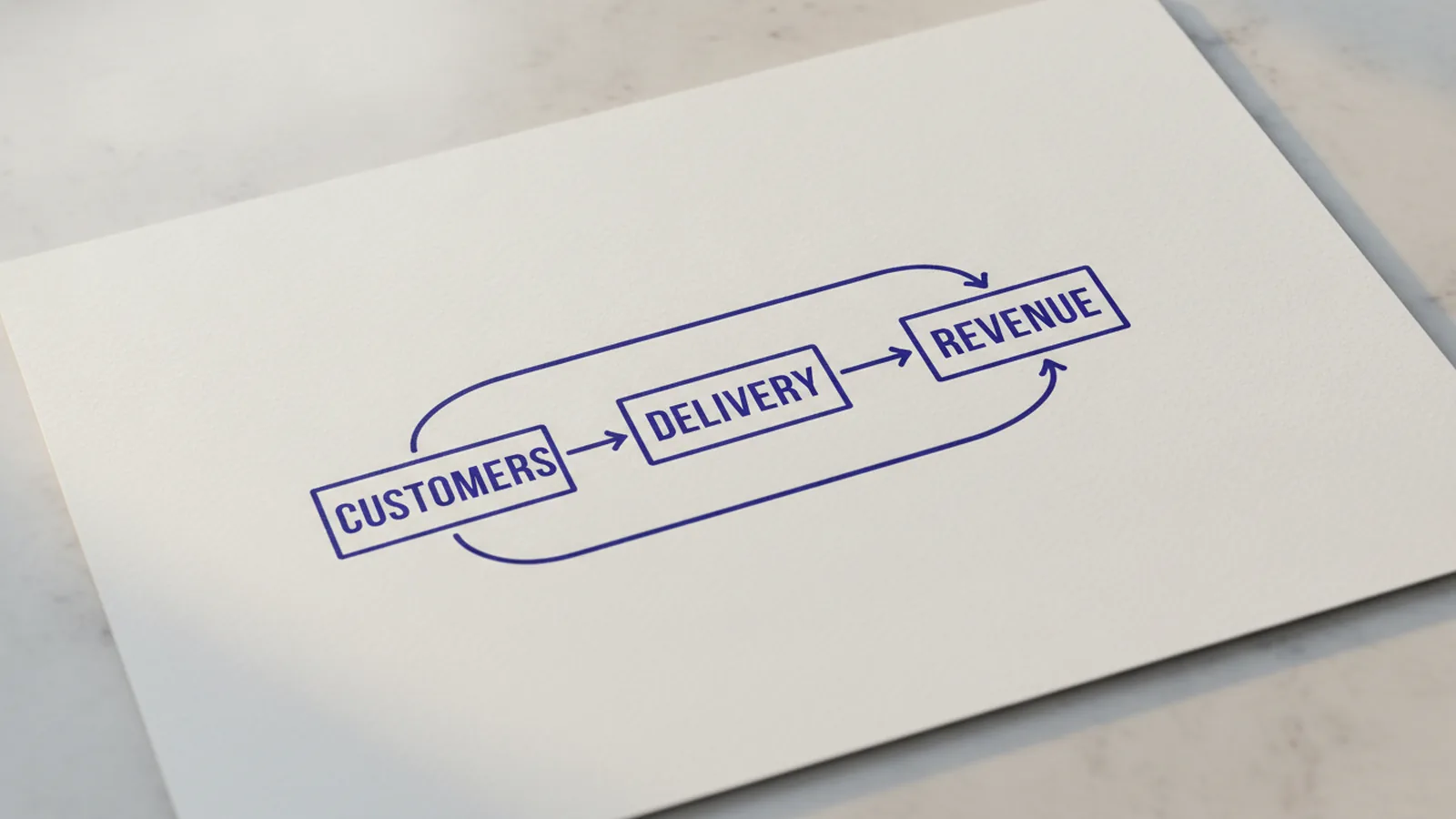
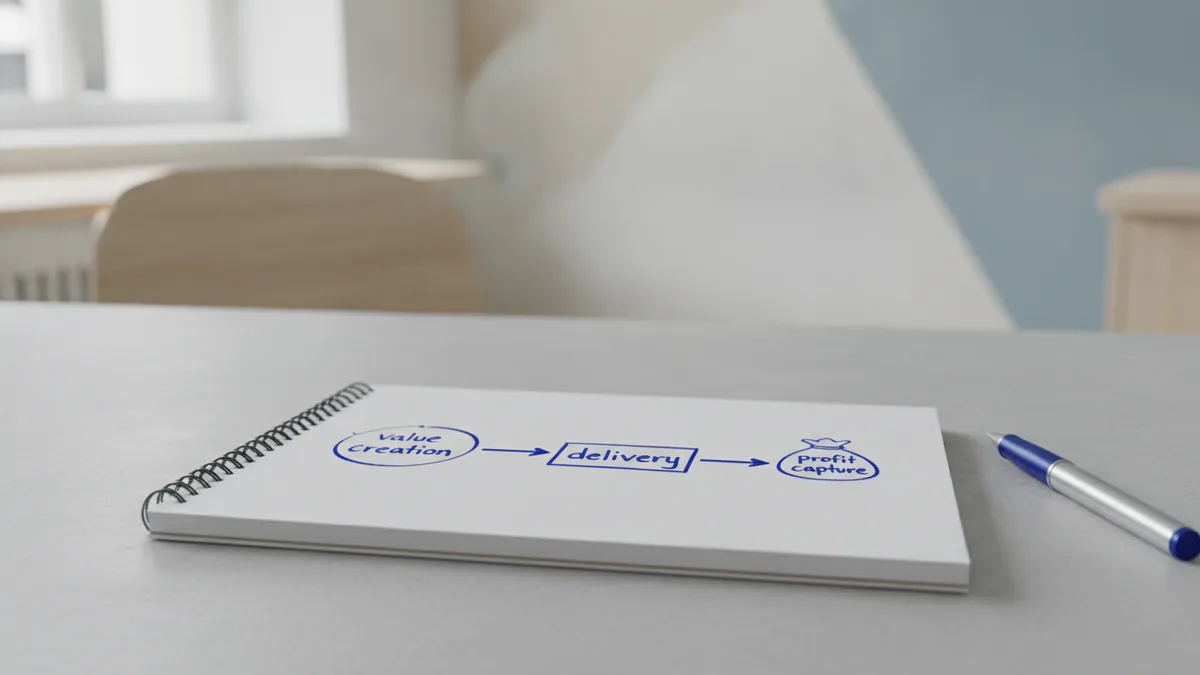
A business model explains how a company creates value, delivers it, and earns value back. That is the short answer to what is a business model and also to what is a business model definition. It describes the “value flow” that links what customers want to how the business serves them.
If you are asking what is a model in business, think of it as a repeatable way to win. It ties customer needs to your offer, delivery, and payments. When those links are clear, you can test assumptions faster.
People often mix this up with planning. The difference between business model and business plan is simple. A business plan focuses on execution, timing, and budgets. A business model focuses on why customers buy and how profit happens.
So when you see what is a traditional business plan, you should read it as a document for running the business. You should read a traditional business model as the logic behind how that business earns. Both matter, but they answer different questions.
- Business model: value creation, delivery, and capture
- Business plan: steps, budget, and milestones to execute
- Outcome: fewer surprises and faster learning
Key components of a business model
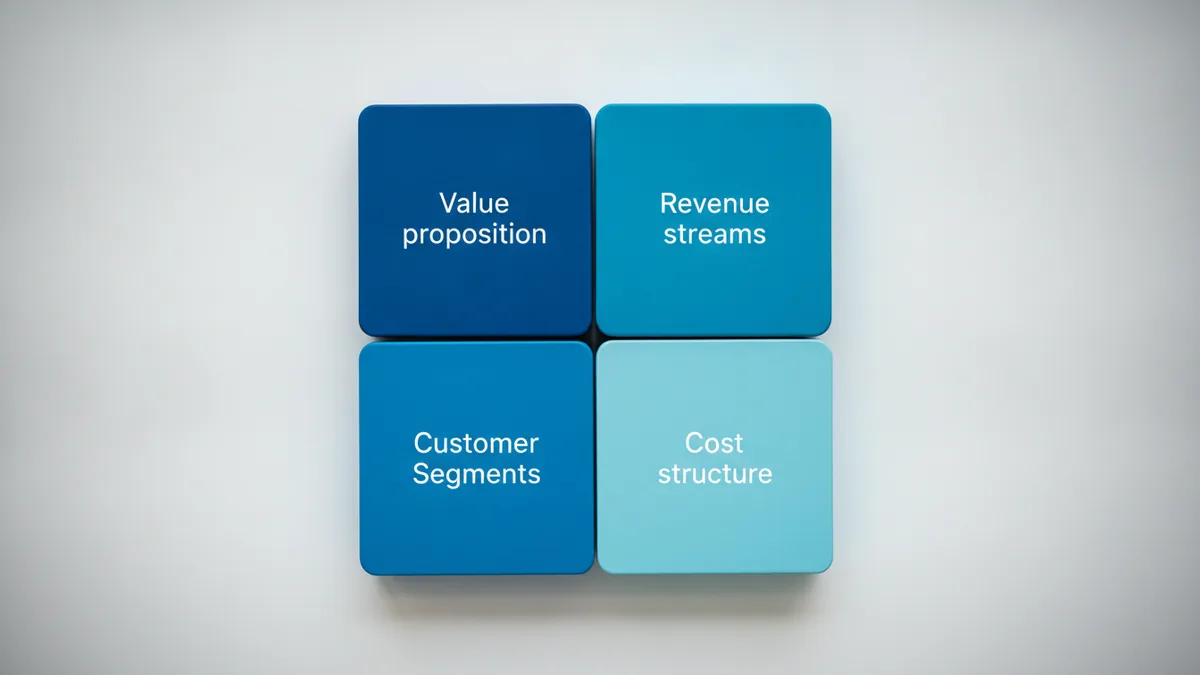
To answer what is in a business model, start with the core parts. Most teams can cover the essentials with value proposition, customer segments, and revenue streams. Then add delivery choices and cost structure to make the model real.
A practical way to think about it is: what is a value proposition in business model? It is your promise of customer value. Next ask what are customer segments in a business model. These are the groups you serve and the specific jobs they need done.
Then map how you get paid. That is what is a revenue model in business in plain terms. Revenue streams describe subscription fees, usage charges, licensing, ads, or other payment types.
| Component | Plain meaning | Check question |
|---|---|---|
| Value proposition | Why customers choose you | What outcome do they pay for? |
| Customer segments | Who you serve | Who pays, and what do they need? |
| Customer relationship | How you onboard and retain | Do you coach, support, or self-serve? |
| Value delivery | How you reach customers | Which channels move the value? |
| Key activities | Your main work | What must be true to deliver value? |
| Key partners | Who helps you deliver | What do you outsource or partner for? |
| Revenue streams | How cash comes in | Subscription, usage, ads, or licensing? |
| Cost structure | Your main cost drivers | Which costs scale with growth? |
Many founders ask what are channels in a business model. In this context, channels are how customers discover and receive your offer. The best models align channels with how customers buy and decide.
To explain it simply, teams often ask how to explain a business model to someone outside the company. A good answer is two sentences. “We target these customer segments. We deliver this value proposition and charge through these revenue streams.”
Business model vs business plan: what to use when
If you want to prevent confusion, keep the job of each tool clear. The what is the difference between business model and business plan is that the business model is about value logic. The business plan is about execution and resources.
A business plan usually includes forecasts, budgets, staffing, and a timeline. It explains how you will ship the product and market it. A business model explains why customers will pay and what makes that payment repeat.
When people ask what is a business model in a business plan, the best answer is that the business plan should reference the business model. The plan should show how the model will be executed over time.
Here is a quick mapping you can use in practice. The model answers “what creates value and profit.” The plan answers “how you will execute that logic in the next year.” If your plan lacks a model, it often becomes a list of tasks without a profit path.
- Business model: customer segments, value proposition, revenue streams, costs
- Business plan: execution steps, milestones, budget, staffing, risk handling
Business model types you will run into
When people search for types of business models, they usually mean common ways companies earn and deliver value. These patterns show up across sectors. They help teams compare ideas without starting from scratch.
Here are common examples. A freemium business model offers basic use for free, then charges for upgrades. A b2b business model sells to business customers and often depends on longer sales cycles.
A business to consumer marketing approach is linked to B2C delivery. It means you market to end consumers rather than business buyers. You might still use a freemium pricing path in B2C if it fits customer behavior.
- Subscription: customers pay monthly or yearly
- Freemium business model: free tier, paid upgrades
- Ad-based: ads and sponsorships fund the service
- Usage-based: charges track actual use
- Licensing: customers pay to use tech or content
- Marketplace business model: match buyers and sellers, take a fee
Some people also ask about platform logic. A traditional business model often means a more familiar setup for your industry. It can include offline sales, reseller networks, or long-term contracts. A business can still be modern without being “traditional,” so treat this term as context, not a rule.
You can also see models based on consumer demand loops. That is where what is a flywheel business model becomes relevant. A flywheel model uses customer actions to increase demand over time. Each win helps fuel the next win.
Other readers ask what is a circular business model. That is a model that reduces waste by keeping products and materials in use longer. It often connects to repair, reuse, refurbishment, and recycling.
For sustainability goals, teams ask what is a sustainable business model. A useful answer is that it balances profit with long-run customer value and responsible resource use. Sometimes it is financial sustainability. Sometimes it is environmental or social sustainability.

Innovating your business model for stronger growth
Innovation is not only about product features. It is also about changing the value flow. That is why people ask what is business model innovation. It means redesigning parts of the business model so value and profit fit the market better.
One way to start is to compare your current setup against a few model patterns. Patterns are repeatable shapes for delivering value and capturing revenue. For example, you might shift from one-time sales to subscription and improve retention.
Another way is to test assumptions in small steps. Start with customer segments and value proposition. Then test delivery and revenue streams. If those parts do not hold, changing costs first can waste effort.
When you hear when your business model is in trouble, it usually looks like one signal. Either customer value is unclear, or your costs are rising faster than revenue. If churn stays high, you likely have a mismatch in customer relationship or value delivery.
Teams also use a model canvas to keep innovation structured. That brings us to what is a business model canvas in practice. It is a one-page tool that visualizes the key components. It helps you spot gaps and make trade-offs visible.
- Pick one constraint: revenue, costs, or retention.
- Map the current value flow: value delivery to revenue streams.
- Change one model lever: a channel or customer relationship.
- Measure quickly: test conversion, retention, and unit economics.
- Decide with evidence: keep, iterate, or drop.
This is also where “business capability” thinking can help. Some teams ask what is a business capability model or what is business capability model. It is not the same as a business model. It describes what your organization must be able to do to execute the business model.
So you can connect the two. A business capability model supports the business model. It builds the key activities and partnership needs you listed earlier.
Business model examples and real-world patterns
To make all this concrete, it helps to review business model examples. You asked for what is a business model example and what is business model example, so here is a simple template you can reuse. Pick a company or product. Then explain the value proposition, customer segments, and revenue streams in plain terms.
Some readers also search for a specific “company business model.” That can mean what is a company business model or what is the business model of a company. In practice, you describe it as the company’s repeating value flow. You do not need jargon to do that.
Classic questions like what is netflix business model often point to a subscription logic with strong customer retention. The exact details vary by market, but the core idea is how content delivery links to recurring payments.
Other readers ask what is the uber business model or what is an operating model in business. The operating model is about internal processes. The business model is about customer value and profit. Uber’s value delivery connects to platform matching and fees, while its operating model governs how drivers, pricing, and support run daily.
Marketplace dynamics show up in questions like what is a marketplace business model. A marketplace earns through take rates or listing fees. It needs strong customer relationship design on both sides.
Digital platforms also appear in searches like what is a portal business model. A portal often aggregates content or services to attract users. It then monetizes through ads, subscriptions, or affiliate-like revenue.
Some people ask about “standard” and “pure” labels. A standard business model is simply the usual way an industry earns today. A pure play business model usually means a focused offer with minimal side businesses. These terms help with positioning, not with model math.
You might also see cooperative structures. Questions like what is a co op business model or what is a cooperative business model refer to ownership and governance that often involves member value. For many co-ops, customer segments overlap with ownership.
Long-run demand models also matter. When people ask what is a long tail business model, they usually mean earning from many small niches rather than one mass market. Likewise, some ask what is business model analysis and how to analyse a business model. That is structured review of value proposition fit, delivery performance, revenue streams, and cost structure.
Finally, you can link innovation to mission and resources. That is where what is business model innovation meets circular thinking. It is also where what is a circular economy business model fits, since the circular economy changes what “value delivery” means.
If you want to apply this today, write one paragraph answer. Use these prompts. “Our customer segments are… Our value proposition is… Our value delivery uses… Our revenue streams are… Our cost structure is…” That is the fastest way to clarify what is my business model or what is your business model.
Developing a business model canvas step by step
If you are unsure where to begin, start from the canvas. That helps you document what is a business model definition in your own words. It also helps you explain the model to partners and investors.
First, choose your customer segments and value proposition. Then map customer relationship and value delivery. After that, list key activities, key partners, and cost structure. Finally, write revenue streams and clarify how pricing works.
The goal is not perfect wording. The goal is clear choices. If you cannot justify revenue streams with customer segments and delivery, the model is still a draft.
- Write value proposition: outcome, not features
- Select customer segments: who pays and why
- Define value delivery: channels and touchpoints
- List revenue streams: how you charge
- Confirm cost structure: what scales and why
Once the canvas is filled, run a simple test. Change one block and predict what happens to the rest. Then validate with customer calls and small experiments. That is how business model patterns become real work.
FAQ: Business model definitions, types, and innovation
What is a business model definition?
A business model definition explains how an organization creates, delivers, and captures value. It links value proposition, customer segments, and revenue streams in one logic.
What is the difference between business model and business plan?
A business model describes the value flow and profit logic. A business plan describes execution steps, budgets, and milestones to deliver that logic.
What is a freemium business model?
A freemium business model offers a basic product for free and charges for upgrades. It relies on converting free users into paying customers.
What is a b2b business model?
A b2b business model sells to business customers rather than end consumers. It often includes multiple decision makers and longer sales cycles.
What is a circular business model?
A circular business model keeps materials and products in use longer. It reduces waste through repair, reuse, and recycling loops.
How do you explain a business model clearly?
Start with customer segments and value proposition. Then explain how you deliver value and what revenue streams you use to capture profit.
Step-by-step
- 01 Write your value proposition
Describe the outcome your customers pay for. Keep it specific and focused on the job to be done.
- 02 Identify customer segments
List who pays and why they choose you. Separate buyers from users when that matters.
- 03 Map value delivery and customer relationship
Choose channels and touchpoints that reach your customers. Define how you onboard and retain them.
- 04 Define revenue streams and cost structure
List how you charge and what drives unit economics. Make sure costs support your delivery choices.
- 05 Test model assumptions
Change one part at a time and measure results fast. Use customer feedback and small experiments to validate.
Frequently asked questions
- What is a business model definition?
- A business model definition explains how an organization creates, delivers, and captures value. It connects value proposition, customer segments, and revenue streams.
- What is the difference between business model and business plan?
- A business model describes the profit logic and value flow. A business plan covers execution steps, budgets, and milestones.
- What is business model innovation?
- Business model innovation redesigns parts of the value flow to better fit customer needs. It can involve pricing, delivery, or revenue streams.
- What is a b2b business model?
- A b2b business model sells to business customers rather than end consumers. It often includes longer sales cycles and more decision makers.
- What is a circular business model?
- A circular business model keeps products and materials in use longer. It uses repair, reuse, and recycling loops to reduce waste.
- How to explain a business model in a simple way?
- Explain customer segments and the value proposition first. Then describe value delivery and the revenue streams that capture profit.
Related reading

How CRM Improves Business Performance — From Sales to Service
See how CRM can help your team serve customers and work smarter.

Find Consulting Jobs (From Search to Offer)
Find consulting roles, build strong applications, and prepare for interviews.

Start a Property Management Business (From First Steps to Growth)
Build a property management firm with the right niche, rules, tools, and client plan.