How Energy Conversion Works in an Electrolytic Cell
See how power drives chemical change inside an electrolytic cell.

What Is an Electrolytic Cell?
Which energy conversion occurs in an operating electrolytic cell? It changes electrical energy into chemical energy.
An outside power source drives the change. The reaction would not happen on its own.
This process is called electrolysis. It uses moving charges to make new substances.
The new substances can hold more chemical energy than the starting materials. The cell stores that energy in its products.
The Main Parts of an Electrolytic Cell
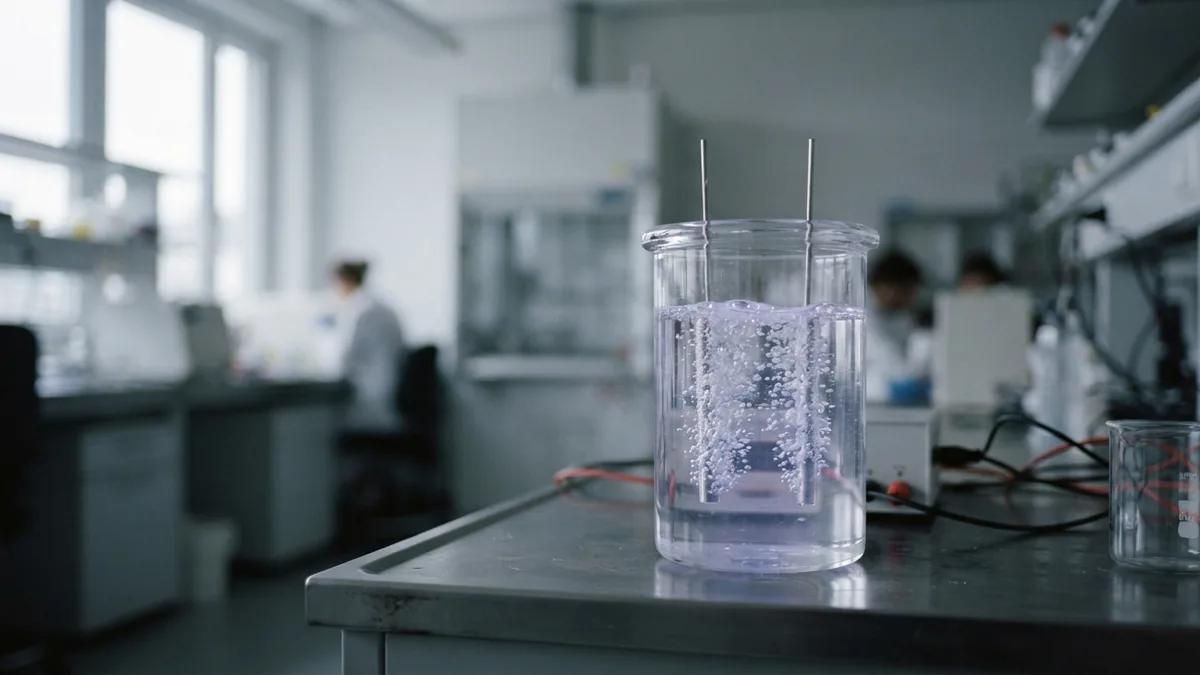
An electrolytic cell has two electrodes and an electrolyte. An electrode is a solid path for electric charge.
An electrolyte is a liquid or melted salt that carries charge. It does so through moving ions.
An ion is an atom or group with an electric charge. Positive ions move toward the negative electrode.
Negative ions move toward the positive electrode. This movement helps keep the inner path of charge open.
- Anode: oxidation happens here.
- Cathode: reduction happens here.
- Electrolyte: ions move through this material.
- Power source: electricity drives the reaction.
Oxidation means a loss of electrons. Reduction means a gain of electrons.
In an electrolytic cell, the anode is positive. The cathode is negative.

How the Electrolysis Process Works
First, connect the cell to a power source. The source creates a push between the two electrodes.
Electrons then move through the outer wire. Ions move through the electrolyte inside the cell.
Positive ions move to the cathode. They gain electrons when they reach its surface.
Negative ions move to the anode. They lose electrons when they reach that surface.
- Connect the source. Apply the needed voltage across the cell.
- Move the ions. Positive and negative ions travel in opposite paths.
- Run the cathode step. Positive ions gain electrons there.
- Run the anode step. Negative ions lose electrons there.
- Gather the products. New solids, liquids, or gases may form.
Water electrolysis gives a clear example. It splits water into hydrogen and oxygen.
Hydrogen forms at the cathode. Oxygen forms at the anode.
The power source supplies the needed push. Without it, the full reaction will not run.
How Electrical Energy Becomes Chemical Energy
The key energy conversion in an electrolytic cell is electrical energy to chemical energy.
The power source does work on the reacting materials. It forces them into a higher energy state.
This action drives a non-spontaneous reaction. Such a reaction cannot run by itself.
Some input energy becomes heat. The rest helps break old bonds and form new ones.
| Part | Energy role | Main action |
|---|---|---|
| Power source | Supplies electric energy | Pushes electrons through the circuit |
| Anode | Starts one half of the change | Oxidation takes place here |
| Cathode | Starts the other half | Reduction takes place here |
| Electrolyte | Moves charge inside the cell | Ions travel between the electrodes |
| Products | Store chemical energy | New materials form at both electrodes |
The cell needs enough voltage to start the reaction. Real cells also lose energy through heat and resistance.
So, the working voltage may rise above the ideal value. A higher current can speed up product growth.
It can also create more heat. Good control helps limit waste and unwanted products.
Where Electrolysis Is Used
Electrolysis has many uses in trade and industry. It can purify metals, coat parts, and make key chemicals.
- Metal cleaning: Copper refining removes unwanted metals.
- Surface coating: Electroplating adds a thin metal layer.
- Chemical making: Plants can make chlorine and sodium hydroxide.
- Metal making: Aluminum comes from an electrolytic process.
- Fuel making: Water splitting can produce hydrogen.
In copper refining, impure copper forms the anode. Pure copper forms at the cathode.
Copper ions move through the liquid between the two sides. The result is a cleaner metal sheet.
Electroplating uses a related setup. The part that needs coating acts as the cathode.
Metal ions gain electrons on its surface. They then form a thin, even coat.
Plant workers must watch heat, current, and ion levels. The gap between the electrodes also matters.
These checks help save power. They also help keep the final product smooth and pure.

Electrolytic Cells Compared With Voltaic Cells
A voltaic cell makes electrical energy from chemical energy. Its reaction runs on its own.
An electrolytic cell does the reverse. It uses electrical energy to make chemical change.
Both cell types have an anode and a cathode. Oxidation always occurs at the anode.
Reduction always occurs at the cathode. The names describe the reactions, not the signs.
| Point | Electrolytic cell | Voltaic cell |
|---|---|---|
| Main energy change | Electrical to chemical | Chemical to electrical |
| Reaction | Needs an outside push | Runs on its own |
| Power source | Needed | Not needed during normal use |
| Anode sign | Positive | Negative |
| Cathode sign | Negative | Positive |
This difference gives each cell a clear job. One makes power, while the other uses power.
A rechargeable battery shows both roles. During use, it acts like a voltaic cell.
During charging, it acts like an electrolytic cell. The charger forces the chemical change back.
Why Ion Movement Matters
Ion movement links the two half-reactions inside the cell. Without it, charge would build up near one electrode.
The reaction would then slow down. It might stop soon after it starts.
Positive ions move toward the cathode. Negative ions move toward the anode.
The liquid must let these ions move with ease. It must also limit side reactions.
Water, melted salts, and dissolved chemicals can all act as electrolytes. The best choice depends on the goal.
Electrode choice matters too. Some electrodes take part in the change.
Others mainly carry electrons. Their job is to provide a steady surface for the reaction.
The Core Energy Change
An operating electrolytic cell changes electrical energy into chemical energy. An outside source supplies the needed work.
That work drives a reaction that would not run alone. It also creates useful new materials.
Oxidation occurs at the anode. Reduction occurs at the cathode.
Ions carry charge through the electrolyte. Electrons carry charge through the outer wire.
A voltaic cell has the opposite main energy flow. It changes chemical energy into electrical energy.
That clear contrast explains why these cells serve different roles.
Frequently asked questions
- Which energy conversion occurs in an operating electrolytic cell?
- An operating electrolytic cell changes electrical energy into chemical energy. An outside power source drives the change.
- Why does an electrolytic cell need an external power source?
- It drives a reaction that cannot run on its own. The source supplies the needed electrical push.
- What happens at the anode and cathode in electrolysis?
- Oxidation happens at the anode. Reduction happens at the cathode.
- How do ions move during electrolysis?
- Positive ions move toward the negative cathode. Negative ions move toward the positive anode.
- What is the difference between electrolytic and voltaic cells?
- An electrolytic cell changes electrical energy into chemical energy. A voltaic cell changes chemical energy into electrical energy.
- What are common uses of electrolysis?
- Common uses include metal cleaning, surface coating, metal making, and chemical production.
Related reading

Build an App Business (From First Idea to Launch)
Turn a useful app idea into a tested product and a sound business.

Business Applications — The Software Behind Daily Work
See how business apps support daily work, team goals, and better decisions.

Consulting Jobs — Roles, Skills, and How to Get Started
See what consultants do, which skills matter, and how to enter the field.