Start a Flower Business (From First Sale to Shop)
Choose your model, plan costs, price for profit, and find your first flower customers.

Start with a clear offer and a workable plan
To start a flower business, choose what you will sell, who will buy it, and how you will deliver it. Then test demand, price each order to cover costs, and check local rules before taking paid work. You can begin from home or build toward a shop. The right path depends on your budget, skills, and local buyers.
The wider floral market is forecast to reach $51.83 billion by 2030. That figure signals opportunity, not guaranteed sales for a new shop. Strong results come from a clear niche, dependable flowers, and sound cost control. Start small enough to learn without taking on costs you cannot yet support.
Use these steps to turn an idea into a business customers can trust:
- Pick a business model and define your offer.
- Study local buyers, rivals, and prices.
- Write a plan with costs and sales goals.
- Set prices, register, and check local permits.
- Market your work and track each order.
Choose a model that fits your budget
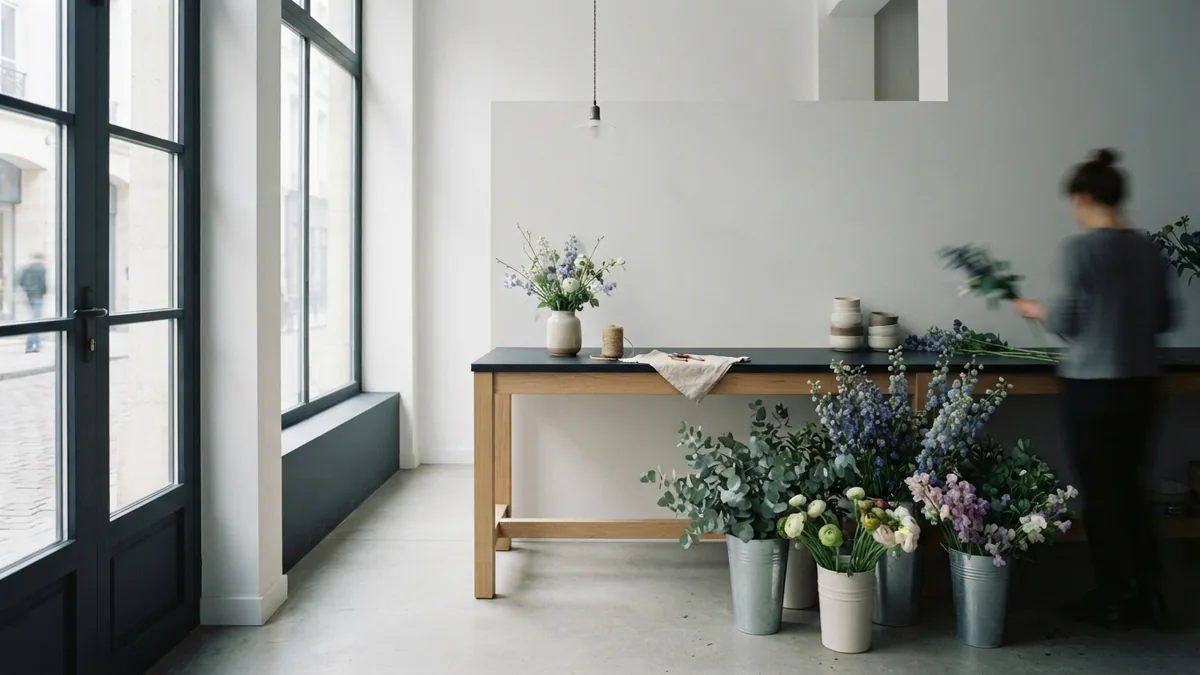
Flower businesses can run from home, online, in a retail shop, or in a floral design studio. Each model brings a different mix of rent, stock, reach, and work. A home-based florist may take orders online and arrange flowers by request. A studio may focus on weddings, events, or custom work.
Online sellers can reach more buyers without a public shop. They still need safe delivery, good product photos, and a plan for fresh stock. A brick-and-mortar shop can draw walk-in trade, but rent and daily waste raise the stakes. A cut-flower business or flower farm adds growing space, tools, and seasonal planning.
Startup costs vary by location and scale. A small home setup may begin near $2,000, while a retail shop can reach $75,000. Treat these as rough starting points, not quotes. Get local estimates for rent, cool storage, tools, insurance, and first stock before choosing.
Match the model to the work you want to do. Floral design needs skill and time, while a shop adds daily sales and stock tasks. You can start with bouquets by preorder, then add a studio or storefront when repeat demand supports it.

Research your market before buying stock
Market research helps you find buyers before you spend heavily. List nearby florists, farm stands, grocery stores, and online sellers. Note what they offer, how they present it, and when they seem busiest. Look for gaps, such as delivery to offices or seasonal local flowers.
Ask potential customers what they buy, when they buy, and what matters most. A short survey can ask about budget, flower types, delivery needs, and event dates. Speak with wedding planners, cafes, and workplaces if they could become regular clients. Check local event calendars to spot likely demand peaks.
Compare prices for similar orders, not just single stems. Record bouquet size, flower mix, wrapping, delivery, and any add-ons. Ask suppliers about minimum orders, delivery days, and seasonal changes. This research helps you set a fair offer and avoid stock that buyers do not want.
Test your idea with a small preorder run before leasing space. Offer a few designs to a defined group, then track what sells and what earns a return. Ask buyers what they liked and what they would change. A small test can expose weak demand early.
Build a business plan around real numbers
A useful flower shop business plan sets out the offer, target customers, market findings, prices, and daily operations. It should explain how you will source flowers and handle orders. Keep the plan short enough to update as you learn. Use real quotes rather than hopeful guesses.
Estimate your opening costs and monthly bills. Include stock, tools, rent, cooling, packaging, delivery, payment fees, insurance, and marketing. Add a cash buffer for slow weeks and unsold flowers. Fresh stock can lose value fast, so cash planning matters.
Work out how many orders you need to cover fixed costs. If monthly fixed costs are $2,400 and each order brings $30 toward those costs, you need 80 orders to break even. This example leaves out tax and owner pay. Adjust it to your own costs and sale mix.
Set simple operating rules before launch. Choose order cut-off times, delivery zones, care instructions, and a way to handle late or damaged orders. Make a supplier backup plan for shortages. Clear rules help you keep service steady during busy weeks.

Price for profit, not just flower costs
Use cost-plus pricing as a starting point. Add the cost of flowers, wrapping, delivery, labor, and payment fees. Then add a margin that helps cover rent, tools, waste, and income. If a bouquet uses $18 in materials and $12 in labor, the price must cover both before overhead or profit.
Do not price by copying a rival without checking your own costs. Flower quality, stem count, design time, and delivery can differ. Keep a record of each order's planned cost and actual cost. Review prices when supplier rates or waste levels change.
Waste is part of the business, but it should not be invisible. Track flowers that expire or fail to sell, then use that rate in your pricing. Buy less of risky stems until demand is clear. Preorders and event deposits can help reduce guesswork.
Check profit by product, not only by total sales. A popular arrangement may take too long to make or cost too much to deliver. Raise its price, simplify its design, or stop offering it. Strong pricing protects quality and pays for your time.
Register the business and check local rules
Choose a business name and legal structure that suit your plans. Registration steps differ by country, state, and city. Check the rules with the relevant government office before trading. Ask an accountant or lawyer if you are unsure about taxes or liability.
You may need a tax registration, seller permit, or local business license. A shop may face extra rules for signs, waste, or building use. Home businesses can also face zoning or lease limits. Confirm what applies before you spend on a space or equipment.
Keep business money and records apart from personal spending. Save supplier bills, sales records, and proof of expenses. Set aside funds for tax as local rules require. Good records make it easier to see whether the business is earning a return.
Build supplier relationships before peak seasons. Ask about stem quality, order cutoffs, substitutions, and delivery terms. Keep a second source for key flowers. Reliable supply helps you meet customer promises without overbuying.
Market your flowers and earn repeat orders
Give your business a clear look and promise. Show the style, price range, and service area in plain terms. Use photos of your own work, with consistent light and backgrounds. Buyers should know what they can order and how to place an order.
Build local ties with event planners, cafes, venues, and nearby firms. Offer a small sample or a simple seasonal menu. Ask happy customers for reviews and permission to share their bouquets. Repeat clients often cost less to win than new ones.
Plan promotions around dates that matter in your area. Valentine’s Day, weddings, graduations, and local holidays can lift demand. Set order limits and deadlines so you do not promise more than you can make. Share care tips to help flowers last and keep customers engaged.
Track where each order came from, what it cost to fulfill, and whether the buyer returned. Keep the channels that bring profitable sales. Change or drop campaigns that draw interest but few orders. Grow at a pace your stock, cash, and work hours can support.
Step-by-step
- 01 Choose your business model
Pick home-based, online, retail, studio, or flower growing. Match the model to your budget, skills, and local demand.
- 02 Research buyers and rivals
Compare local offers and prices, then speak with likely customers. Test demand with a small preorder run.
- 03 Write your business plan
Set out target customers, costs, pricing, suppliers, and daily tasks. Estimate monthly costs and the orders needed to break even.
- 04 Set prices and register
Price each order to cover all costs and leave a margin. Register the business and check permits or local rules.
- 05 Launch and track results
Promote a focused offer through local ties and online channels. Track sales, waste, costs, and repeat orders.
Frequently asked questions
- How much does it cost to start a flower business?
- A home-based setup may start near $2,000, while a retail shop can reach $75,000. Your costs depend on rent, stock, tools, cooling, and local rules.
- Can I start a flower business from home?
- Yes. You can take orders online or by referral and arrange flowers at home. Check local zoning, lease terms, and any permit rules first.
- How do I price flower arrangements?
- Add flower costs, wrapping, labor, delivery, and payment fees. Then include enough margin to cover overhead, waste, and profit.
- Do I need a license to sell flowers?
- Rules depend on your location and business model. Check with local government offices about registration, tax permits, zoning, and any shop rules.
- How do I find customers for a new flower business?
- Start with local partners, clear product photos, and a simple seasonal offer. Track which channels bring paid orders and repeat buyers.
Related reading

Business Management — How Organizations Get Work Done
See how managers plan, lead, and help teams reach business goals.

Start a Consignment Business (From Plan to First Sale)
Build a consignment business with clear terms, careful stock tracking, and focused marketing.

Digital Marketing (What It Is and How It Works)
See how digital channels help businesses reach customers and grow sales.