How Many Bags of Salt for Pool Startup (and How to Manage It)
Saltwater pool startup guide: bags of salt, target ppm, testing, and ongoing adjustments.
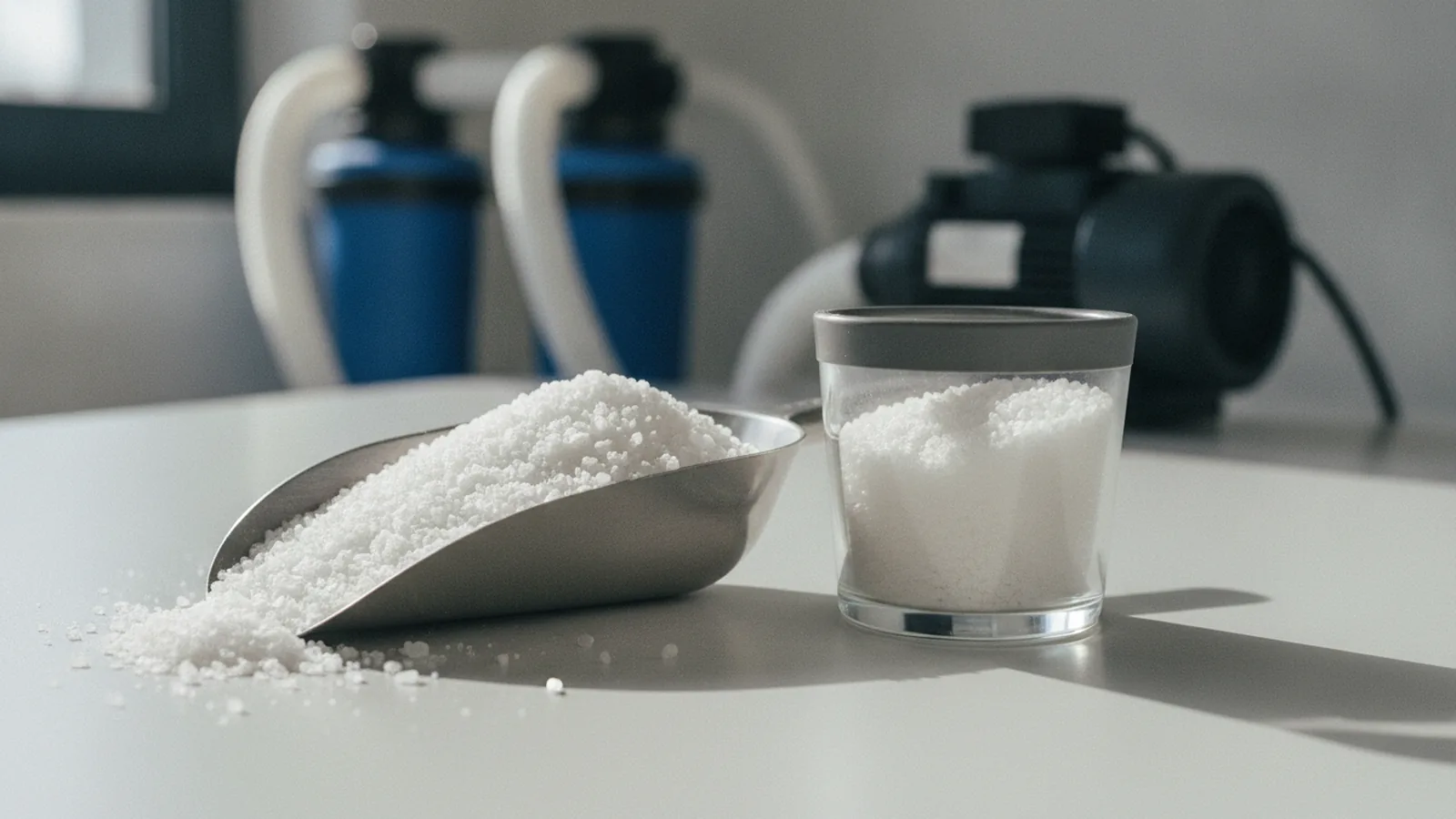
Understanding saltwater pools
A saltwater pool still uses chlorine. It makes chlorine on-site using a chlorine generator, often called a salt cell.
For the generator to work well, the water must have the right salt content. Too little salt can slow chlorination. Too much salt can increase scale and shorten equipment life.
That is why the question is really about saltwater pool startup. You need the correct salt reading and the right target. Then you can add salt in the right amount and keep it stable.
If you are wondering how to start a pool business, start by treating salt like a spec. Your first service call should be about testing, math, and safe setup.
- Chlorine generator function: relies on stable salinity
- Salt target matters: it affects both output and wear
- Season changes happen: rain and splashes dilute salt
Calculating pool volume before you buy salt
Before you do pool salt calculation, you need pool volume measurement. If you already know your gallons, use that number first.
If you do not, estimate from the pool shape and size. Then round to a practical number that matches how bags are sold.
Getting gallons wrong is the most common reason people underbuy or overbuy. Even a small volume error can force you to add more salt later.
When you support a how to start a swimming pool business plan, build your workflow around accurate measurement. Test first, calculate second, and verify after mixing.
| Pool volume (gallons) | What it changes | Why it matters for startup |
|---|---|---|
| 10,000 | Salt amount scales with gallons | Baseline example for first-time math |
| 15,000 | Higher volume needs more salt | Small ppm changes mean more pounds |
| 20,000 | More water needs more mass | You cannot scale by surface area |
Ideal salt levels for pools (the target range)
The ideal salt level for a saltwater pool usually sits between 2,700 and 3,400 ppm. Many systems aim near 3,200 ppm for steady results.
In practical terms, this target range balances chlorination output and salt cell longevity. It also gives room for normal drift during the season.
When salt is too low, the generator may not produce enough chlorine. When salt is too high, scaling risk rises and equipment can wear faster.
So, treat 3,200 ppm as your ideal salt level for pool. Then use testing and re-adding salt during the season to stay in range.
- Target range: 2,700 to 3,400 ppm
- Common optimum: about 3,200 ppm
- Startup goal: hit the target, then manage dilution
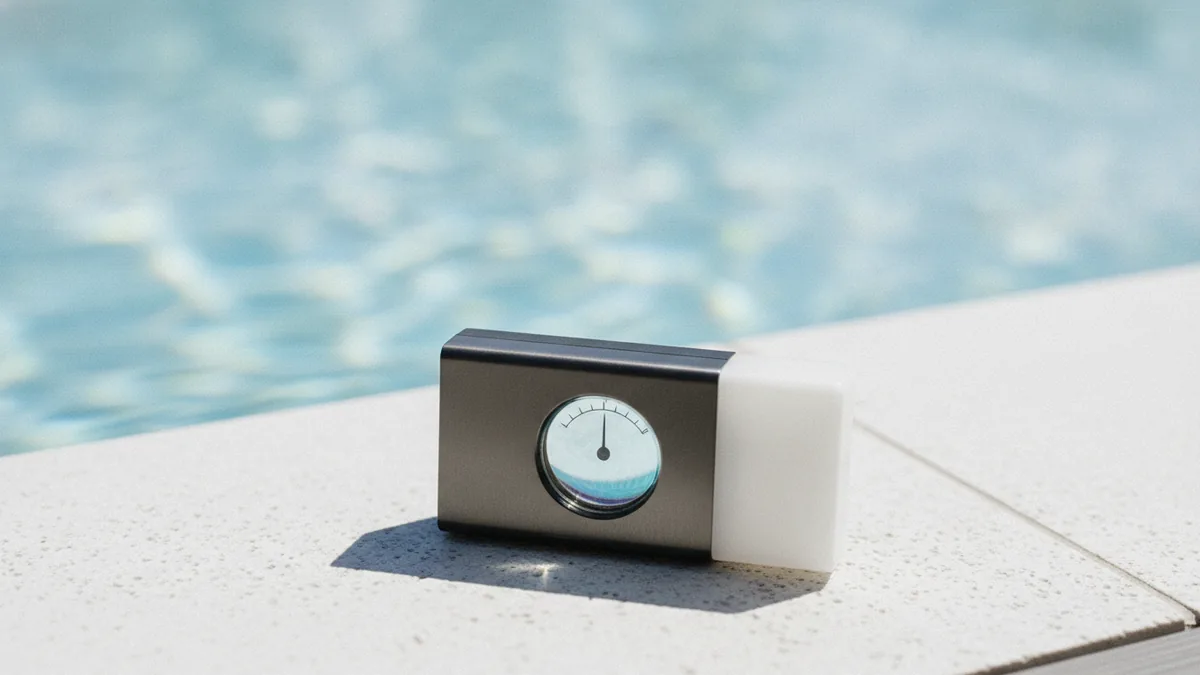
How many bags of salt you need for pool startup
If you search how many bags of salt for pool startup, you are really asking for two things. First, you need your pool volume in gallons. Second, you need your current salt reading in ppm.
For a typical saltwater pool startup from 0 ppm to 3,200 ppm, the math comes out to about 267 pounds of salt for a 10,000-gallon pool. Pool owners often translate that into roughly 6 to 7 bags.
Many salt bags are 40 pounds. Using that bag size, 267 pounds is about 6.7 bags. Your bag weight may differ, so always match the packaging.
If you are building a how to start a pool service business, this is where your estimates earn trust. Show the formula, show your inputs, and confirm with testing after the salt mixes.
The exact salt amount formula
Use this pool salt calculation formula for the pounds of salt to add:
Gallons x 8.35 x (0.0032 - current ppm)
This works when your target is 3,200 ppm, shown as 0.0032. Replace current ppm with your tested reading.
Example: 10,000 gallons, current salt is 0 ppm.
10,000 x 8.35 x (0.0032 - 0) = 267.2 pounds of salt.
- Test your current ppm to use the right starting value.
- Use your gallons from pool volume measurement.
- Run the formula to get pounds of salt to add.
- Convert to bags using your bag weight in pounds.
Testing salt levels so your numbers are accurate
Before you add salt, confirm what your water already has. Salinity testing helps you avoid overcorrecting. It also protects the chlorine generator function from wrong inputs.
Common salinity testing methods include digital testers, liquid reagent kits, and salt test strips. Digital testers are fast and easy for repeated checks.
Liquid reagent kits can be very accurate when you measure carefully. Salt test strips are convenient for quick monitoring, but they can be less precise near the edges of their range.
If you are planning how to start a pool maintenance business, make testing your default step. Customers notice when you arrive with a testing plan, not guesswork.
| Testing method | Best for | Watch-outs |
|---|---|---|
| Digital tester | Fast checks during saltwater pool startup | Keep probes clean and dry before testing |
| Liquid reagent kit | More exact readings | Measure drops and mix fully |
| Test strips | Quick daily or weekly checks | Read promptly in good light |
After you add salt, re-test once it has circulated and dissolved. This usually means waiting after dosing, then retesting when the reading stabilizes.
Adding salt to your pool for first time
When adding salt to pool for first time, uniform distribution matters. If you dump salt in one spot, it can dissolve slowly and create uneven readings.
Instead, spread the salt in several spots around the pool. Aim to keep the salt from sitting in a concentrated pile.
Also, run circulation to help the salt disperse. The goal is to let the salt mix into the water before you take your next reading.
This is a core process if you support how to start a pool installation business. Your installation is not done until the salt level, testing, and circulation steps are complete.
- Spread dosing: add in multiple areas, not one dump
- Use circulation: help salt dissolve evenly
- Verify after mixing: test again after the wait
Maintaining salt levels throughout the season
Salt does not stay perfectly fixed. Rain impact on salt levels is a real factor because rainfall adds lower-salt water. Splash-out from swimmers also reduces salt concentration over time.
That is why re-adding salt during the season is normal. You should re-test periodically and adjust based on the reading and season conditions.
When you aim for an ideal salt level for pool of about 3,200 ppm, you still need a plan for drift. Stay within the 2,700 to 3,400 ppm target range whenever possible.
If you are learning how to start pool business operations, treat these checks as part of pool maintenance tips. A small adjustment now can prevent generator stress later.
- Re-test after heavy rain: update the ppm reading, then adjust if needed.
- Track splash-out: check salt after high swimmer activity weeks.
- Adjust with small doses: add less, test again, then fine-tune.
- Keep notes: record ppm before and after each dose.
Once your salt level is steady, your salt cell can run closer to its expected behavior. That supports longer equipment life and more predictable chlorine production.
Quick checklists for business planning
If you are building how to start a pool service business or how to start a pool maintenance business, your process needs repeatability. You want the same steps every time, even when pool sizes differ.
Use these checklists to standardize first-time visits and ongoing service. They also fit how to start a pool hall business or how to start a pool installation business by keeping the pool ready for steady use.
- First visit checklist: test current salt ppm, measure gallons, run pool salt calculation, confirm after mixing
- Season checklist: re-test after rain impact, adjust for dilution, record results, keep salt within the target range
- Customer update script: explain target ppm, show bag math, and tell them when you will re-check
This keeps your estimates accurate and reduces callbacks. It also makes your work easier to price and explain.
Frequently asked questions
- How many bags of salt for pool startup do I need for a 10,000-gallon pool?
- From 0 ppm to about 3,200 ppm, you need about 267 pounds of salt. With 40-pound bags, that is roughly 6 to 7 bags.
- What is the ideal salt level for pool water?
- A typical target range is 2,700 to 3,400 ppm. Many systems aim near 3,200 ppm for steady chlorine output.
- How do I do pool salt calculation to get the exact pounds of salt?
- Use Gallons x 8.35 x (0.0032 - current ppm). Your current ppm must come from salinity testing.
- What are good salinity testing methods before adding salt?
- You can use a digital tester, a liquid reagent kit, or salt test strips. Choose one you can use consistently and follow the directions closely.
- How should I add salt to pool for first time to avoid uneven readings?
- Add salt in several spots around the pool, not in one pile. Run circulation so the salt dissolves and mixes before you test again.
- Why do salt levels drop during the season?
- Rain adds diluted water and splash-out reduces salt concentration. Periodic re-testing lets you re-add salt to stay in range.
Related reading

Start a Mobile Drug Testing Business (Without a Lab)
Build a mobile testing service with sound training, lab links, and clear pricing.

Start a Business with a Problem Worth Solving
Turn a useful idea into a business with clear steps, sound research, and steady resolve.

Loft Conversion Timelines — What Affects the Build
Typical build times range from four to twelve weeks, plus planning and setup.