How to Start a Burger Business: A Practical Launch Guide
A practical plan for launching a profitable burger shop, van, or food truck.

Start with a clear burger concept
To learn how to start a burger business, begin with the offer, not the kitchen. Choose the format, customer, price point, and service style first. Your concept will shape your costs, menu, staff needs, and site choice.
Burger business ideas range from a quick takeaway to a full fast-casual dining room. You could also run a burger van, food truck, market stall, or delivery kitchen. Each model needs different permits, equipment, trading hours, and cash reserves.
- Quick-service shop: Focus on speed, simple menus, and high order volume.
- Fast-casual restaurant: Offer more choice, better seating, and a stronger dine-in feel.
- Burger van or food truck: Keep the menu small and move toward busy trading spots.
- Delivery kitchen: Save on seating costs, but plan for delivery fees and packaging.
About 85% of customers love or like burgers. That creates a large market, but demand alone does not ensure success. Your concept must fit local habits and leave enough room for profit.
Find a gap in the local burger market
Study nearby burger shops before you sign a lease or buy a van. Record their prices, busiest hours, ratings, menu size, and service speed. Visit at lunch, dinner, and weekends for a more useful market view.
Look for gaps that customers can understand at once. A small town may need a family meal deal. A city site may suit premium smashed burgers. A gym area may support lean meals, while a late-night site may reward fast service.
Location is crucial. A bad site can block growth, even with great food. Check foot traffic, parking, delivery reach, nearby offices, schools, homes, and competing shops.
Ask at least 30 local people about price, toppings, opening hours, and order habits. Use their answers to test your plan. Do not treat every opinion as proof. Compare feedback with real trading data.
Build a budget before spending money
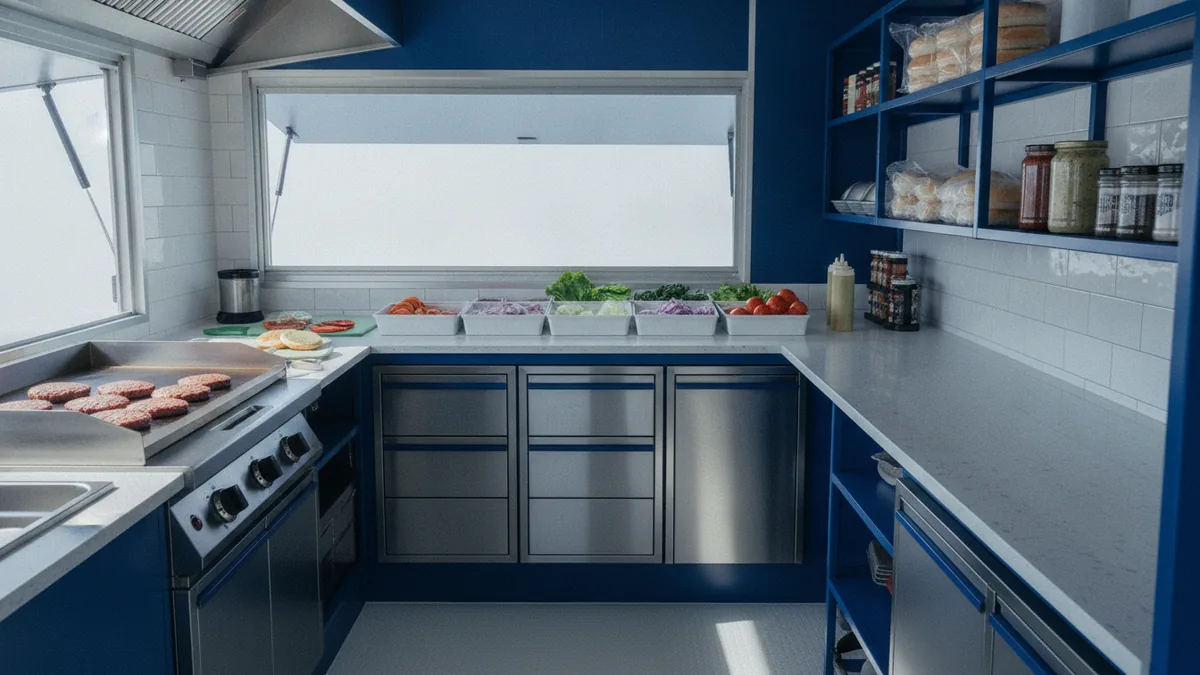
Your first budget should cover setup costs and several months of trading. New owners often plan for equipment, but miss rent deposits, insurance, waste removal, packaging, and staff pay. Keep a cash buffer for slow weeks and repairs.
List each cost in a simple cash plan. Add a high and low estimate for each item. Then test what happens if sales reach only 60% of your first forecast.
| Cost area | What to include |
|---|---|
| Premises or vehicle | Deposit, rent, lease fees, fit-out, or van purchase |
| Kitchen setup | Grill, fryer, fridge, freezer, prep tables, sinks, and extraction |
| Dining and service | Tables, chairs, bins, trays, tills, signs, and card fees |
| Opening stock | Beef, buns, cheese, produce, sauces, drinks, and packaging |
| People and running costs | Wages, utilities, cleaning, insurance, waste, fuel, and delivery fees |
A lean van may cost less than a fitted restaurant, but it still needs a sound budget. Vehicle repairs, fuel, storage, and pitch fees can rise quickly. Set aside money for stock loss and equipment faults.
Price each burger from its full cost. Include food, packaging, staff time, rent, and payment fees. A low menu price can create busy shifts with little cash left.
Choose the right space and equipment
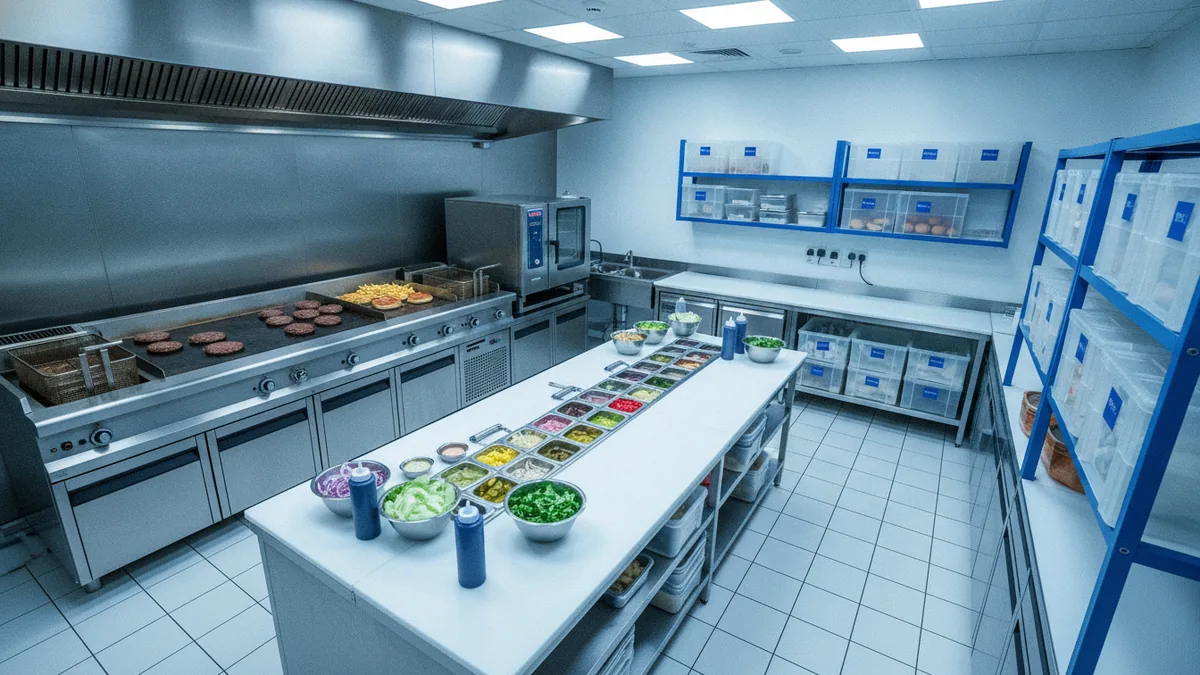
A restaurant needs enough room for prep, cooking, storage, washing, service, and waste. Draw the work flow before signing a lease. Staff should move from storage to prep to cooking without crossing dirty areas.
Core cooking equipment often includes a flat-top grill, fryer, refrigeration, freezer, extraction, sinks, and prep benches. You may also need a meat grinder, bun toaster, holding cabinet, and dishwasher.
Buy equipment that matches your menu. A small menu may need one grill and a compact fryer. A broad menu needs more storage and more staff training. Extra features add cost, cleaning time, and repair risk.
For a burger van, check power, water, gas, ventilation, and food storage limits. Learn how to start a burger van business by checking pitch rules first. Some councils limit sites, hours, waste plans, and cooking methods.
- Confirm power needs before buying a grill or fryer.
- Measure doors, counters, storage areas, and vehicle access.
- Plan cold storage for meat, dairy, produce, and prepared sauces.
- Choose washable surfaces and a clear cleaning routine.
Ask your local food authority about registration, inspections, hygiene rules, fire safety, waste disposal, and trading permits. Requirements vary by place. Get written guidance before you spend on a fit-out.
Decide between a franchise and an independent shop
A franchise gives you a known brand, set recipes, training, supplier links, and launch support. These systems can reduce early guesswork. They may also help with menus, staff training, and marketing.
The trade-off is a higher first cost and less control. You may pay an entry fee, ongoing royalties, marketing charges, and approved supplier prices. Read the full agreement before making a choice.
An independent business gives you more freedom. You can change the menu, choose suppliers, and build a local name. You also carry the full risk for branding, recipes, systems, and customer growth.
Compare both paths with the same five-year cash plan. Include fees, rent, wages, loan costs, expected sales, and your own pay. Choose the model that fits your money, skills, and appetite for risk.
Create a menu that earns its place
Start with a tight menu. Three or four core burgers can support faster service and simpler stock control. Add one chicken, vegetarian, or vegan choice if local demand supports it.
A unique burger can set your business apart in a crowded market. Try a local sauce, regional cheese, house pickle, or a clear cooking style. The idea must taste good and work during a busy shift.
Test every recipe for speed, waste, portion size, and repeat quality. Weigh the patty and toppings during trials. A small change in portion size can affect profit across thousands of orders.
Build meals around sensible add-ons. Fries, drinks, shakes, and sauces can lift the average order. Keep the choices clear so customers do not slow the queue.
Make your promise easy to remember
Your unique selling point should fit in one short sentence. It might be “fresh local beef, cooked fast” or “big vegan burgers with no waste.” A clear promise helps staff, signs, menus, and online posts stay aligned.
Market the business before opening day
Start marketing several weeks before launch. Share the opening date, menu tests, site details, and early offers. Use clear photos of the food and keep prices easy to find.
Claim your local map listing and keep hours, menus, and phone details correct. Ask happy customers for honest reviews after purchase. Reply to complaints with a calm, useful answer.
Use launch offers with care. A free add-on may work better than a deep discount. Track each offer with a code so you know which channel brings sales.
- Post short cooking clips and new menu trials.
- Partner with nearby offices, gyms, clubs, and event sites.
- Offer a simple repeat-order reward.
- Track sales by hour, item, channel, and average order value.
Review the numbers each week. Remove weak menu items and promote strong sellers. Good marketing brings the first order. Good food and fast service bring the next one.
Follow a practical launch plan
Once the concept and budget work on paper, set a launch order. Register the business, check local rules, secure the site, and arrange insurance. Then order equipment, test suppliers, and hire only the staff you need.
- Write the concept, menu, customer profile, and sales forecast.
- Compare sites, pitches, or delivery zones with real local data.
- Confirm licences, food rules, safety needs, and insurance.
- Build the budget and keep cash for at least three slow months.
- Test recipes, prices, packaging, service speed, and stock levels.
- Run a soft opening and fix problems before the full launch.
Starting a fast-casual restaurant takes more than a good recipe. It needs tight costs, clean systems, a strong site, and a reason to return. Keep the first version focused. Add new ideas only after the core service runs well.
Step-by-step
- 01 Choose the burger format
Pick a shop, van, truck, market stall, or delivery kitchen. Match the format to your money and local demand.
- 02 Study the local market
Check rival prices, busy times, reviews, sites, and customer needs. Look for a gap your concept can fill.
- 03 Build the cash plan
List setup costs, monthly costs, stock, wages, and a cash buffer. Test the plan with lower sales.
- 04 Check rules and secure the site
Confirm food registration, licences, insurance, fire needs, waste rules, and trading permissions before signing.
- 05 Buy equipment and test the menu
Choose equipment that fits your menu and space. Test recipes, portions, service speed, prices, and packaging.
- 06 Launch and track results
Run a soft opening first. Track sales, costs, reviews, wait times, and repeat orders each week.
Frequently asked questions
- How do I start a burger business?
- Choose a concept, study local demand, build a full budget, and check food licences. Then test the menu before opening.
- How do I start a burger van business?
- You need a suitable vehicle, cooking gear, food storage, insurance, trading permission, and approved pitches. Keep the menu small for fast service.
- What licences does a burger food truck need?
- A food truck needs vehicle checks, food registration, hygiene controls, waste plans, and local trading permits. Rules differ by council or region.
- Is a burger franchise better than an independent business?
- A franchise offers brand support and set systems, but costs more and gives you less control. An independent shop offers freedom but carries more risk.
- How much does it cost to start a burger business?
- Core costs include premises or a vehicle, kitchen equipment, stock, staff, insurance, packaging, utilities, and marketing. Keep cash for repairs and slow sales.
- How can a burger business stand out?
- Offer a clear difference, such as a local ingredient, special sauce, distinct cooking style, or strong plant-based range. Make the promise easy to explain.
Related reading

Find Consulting Jobs (From Search to Offer)
Find consulting roles, build strong applications, and prepare for interviews.

Start a Property Management Business (From First Steps to Growth)
Build a property management firm with the right niche, rules, tools, and client plan.

Use Digital Marketing Services to Grow Your Business
Explore digital marketing channels, benefits, setup steps, and ways to measure results.