How to Start a Fiber Optic Business: Setup, Licenses, and Clients
A clear guide to starting a fiber optic company with gear, licenses, safety, and client strategy.

Understanding the fiber optic industry
To how to start a fiber optic business, track demand and match your crew to it. Fiber work grows as governments fund broadband and as carriers expand 5G.
Many jobs come from telecom firms and internet service providers. Some work is planned build, like new lines. Other work is repair and splicing after damage or outages.
Underground jobs are fast and strict. If you miss a date, you may face fee hits. If you damage a line, outages can spread quickly.
That is why buyers expect proof, not promises. They want clean site notes and steady safety habits.
Choosing your business model
Choosing the right business model is key for starting a fiber optic company. Many teams start small and grow after contract wins.
Pick one tight scope for your first bids. Then add more tasks after you learn the local rules. This keeps your plan simple and your quote accurate.
Here are common ways to start, with clear pros and tradeoffs:
- Sub crew: Work under a prime or a general contractor. This can reduce lead time.
- Local installer: Build repeat work with a few carriers or ISPs.
- Small full-service: Combine locating, duct runs, and set back work, within limits.
As you win work, reinvest in one new skill at a time. This makes your fiber optic business setup feel steady, not random.
Essential equipment for starting
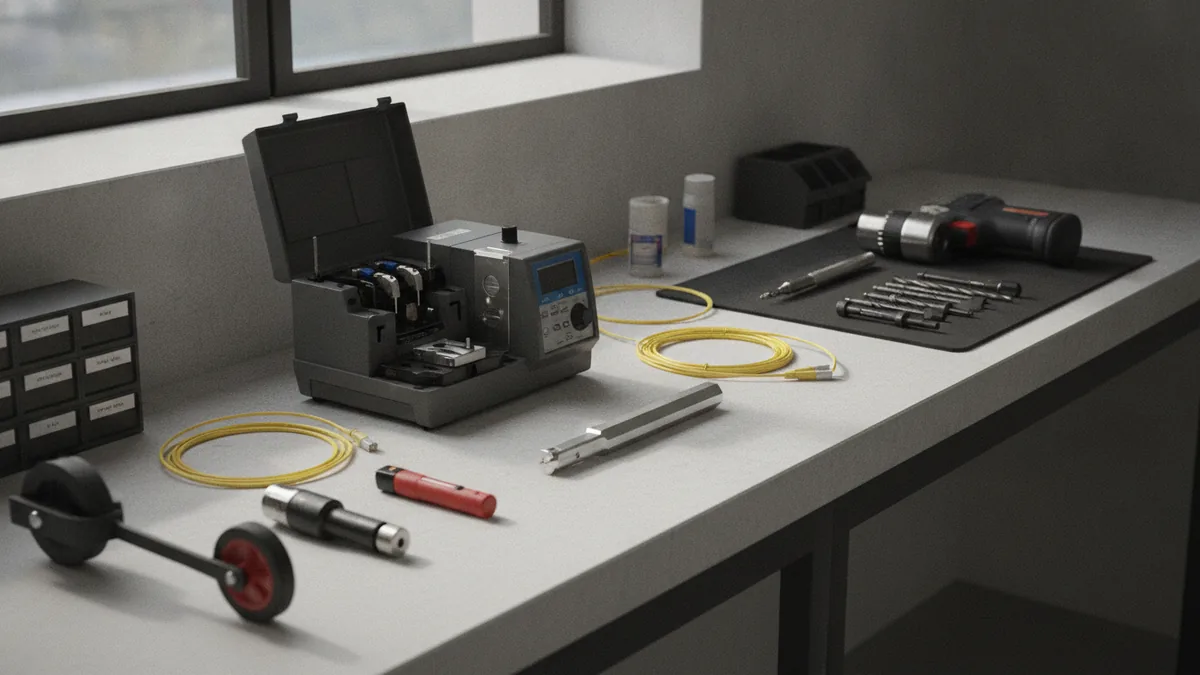
Equipment drives your first scope and your first quotes. Plan equipment acquisition around what you will actually do on day one.
For fiber optic installation business work, many jobs need directional drilling. You will also need a mud mix setup to run the bore fluid.
You also need a locating system before digging. It helps you find buried utilities and reduce strike risk.
Do not skip safety gear. High-vision gear, gloves, eye wear, and ear wear are a must.
This table shows a starter map for common work steps:
| Work step | Typical gear | What it helps you do |
|---|---|---|
| Site check | Locating system, site flags | Find buried lines and record what you saw |
| Bore or trench | Directional drill, trench tools | Place duct with tight control |
| Place duct | Conduit tools, pull aids | Keep duct safe and ready for pulls |
| Job close | Job logs, as-built notes | Show proof for job sign-off |
Licensing and certification requirements
Licenses and rules vary by state. If you want starting a fiber optic service, check your state board early.
In many places, a general contractor license may be needed for underground work. The exact class can vary by city and scope.
Safety training also matters. OSHA (a U.S. safety rule body) often expects proof for key hazards.
To avoid bad surprises, do two checks before you buy major gear. First, confirm the license class for your work type. Second, ask local primes what they require for vendor setup.
If you are new, start with a narrower scope. Then add more tasks after you meet the needed rules.
Insurance needs for fiber optics
Insurance for contractors is a must in this field. Underground work has high risk, even for skilled crews.
A strike can cause damage, claims, and outage time. A job can also injure workers or harm nearby land and gear.
Most jobs ask for basic sets. These often include general liability, work comp, and car cover. Many primes also want umbrella cover for higher limits.
Tell your broker your exact scope. Include drilling, locating, and any trenching you will do. Ask about the claim path and your needed limits.
To quote fast, build a proof pack. Store your policy docs in one folder and keep them current.

Finding clients and networking strategies
To get clients fast, use steady client acquisition steps. For starting a fiber optic company, the best leads often come from bids and vendor lists.
Start with telecom primes and general contractors. They hire crews when a project schedule is set. Local property groups can also bring repeat work for drops.
Use networking strategies that match the buyer. Meet project managers, not just vendors at booths. Ask who handles subcontractor picks for the next quarter.
Bidding platforms can help you reach more jobs. Set alerts for your scope and then reply fast. Many wins go to the crew that submits clean docs on time.
Run this 90-day client plan for a clear path:
- List 10 primes and 10 local contractors with past telecom work.
- Write a one-page capability sheet with your scope and gear.
- Request vendor setup forms and fill them out fully.
- Apply to bids that match your scope and your safety plan.
- Track wins, misses, and reasons in a simple sheet.
After your first job, protect your proof. Keep neat logs and quick closeout notes.

Safety and risk management in fiber optics
Safety is the core of safety management in fiber work. Utility strikes and gear damage can end jobs and trigger big claims.
Begin with risk assessment. For each site, name the top hazards and your guard steps. Then share that plan in a short pre-task talk.
For strike prevention, use a locating step every time. Then verify marks on site before drilling. If marks look off, stop and re-check.
Directional drilling adds its own hazards. Train your crew on bore forces and fluid handling. Set clear stop rules for unstable soil and odd ground signs.
Also plan for traffic and site flow. Use cones and barriers when cars or foot paths are near. Keep walkways clear so workers can move safe.
Quality is part of risk control. A bad duct run can block pulls later. Keep job notes and tests as proof for the next step.

FAQ about starting a fiber optic business
How much money do I need to start a fiber optic business?
Your costs depend on gear like a drill and a locating system. Many new crews start as a sub crew to fund gear later.
What licenses do I need to start a fiber optic company?
Licensing depends on your state and your job scope. A general contractor license is often needed for underground work.
OSHA safety training is also commonly asked for at job sites.
What equipment is essential for fiber optic installation?
Many crews need a directional drill for underground work. You also need a mud mix system and a locating system.
Add safety gear and basic hand tools for trench and duct tasks.
How do I get my first clients for a fiber optic service?
Start with telecom primes and local general contractors. Use vendor signup and bid alerts that match your scope.
Then follow up fast with your proof docs.
What insurance should I get for underground fiber work?
Many primes want general liability, work comp, and car cover. Umbrella cover may be needed for higher limits.
How do I manage risk during directional drilling?
Use a clear risk plan for locating, soil, fluids, and site controls. Stop work if marks or ground conditions look wrong.
Frequently asked questions
- How to start a fiber optic business with no experience?
- Start as a subcontractor crew under a prime or general contractor. Choose a narrow scope first and document your safety training and job records.
- What equipment do I need for a fiber optic installation business?
- Common essentials include a directional drill, mud mixing system, locating system, and job safety gear. Your exact list depends on underground vs. aerial and on your contract scope.
- Do I need a license to start a fiber optic company?
- Often yes. Licensing requirements vary by state, and general contractor licensing may apply for underground work.
- What insurance is typically required for fiber optic contractors?
- Most projects require general liability, commercial auto, and workers’ compensation. Many also request umbrella coverage due to outage and damage risk.
- How do fiber optic contractors find clients quickly?
- Use vendor onboarding with telecom primes and active participation in bid platforms. Build relationships with regional contractors and follow up after submissions.
- What are the biggest safety risks in directional drilling?
- Utility strikes and equipment damage are top risks. Strong locating, site verification, and a written risk assessment help prevent costly incidents.
Related reading

Start a Mobile Drug Testing Business (Without a Lab)
Build a mobile testing service with sound training, lab links, and clear pricing.

Start a Business with a Problem Worth Solving
Turn a useful idea into a business with clear steps, sound research, and steady resolve.

Loft Conversion Timelines — What Affects the Build
Typical build times range from four to twelve weeks, plus planning and setup.