How to Start a Wax Melt Business from Scratch
Start selling wax melts with smart testing, pricing, and marketing steps.
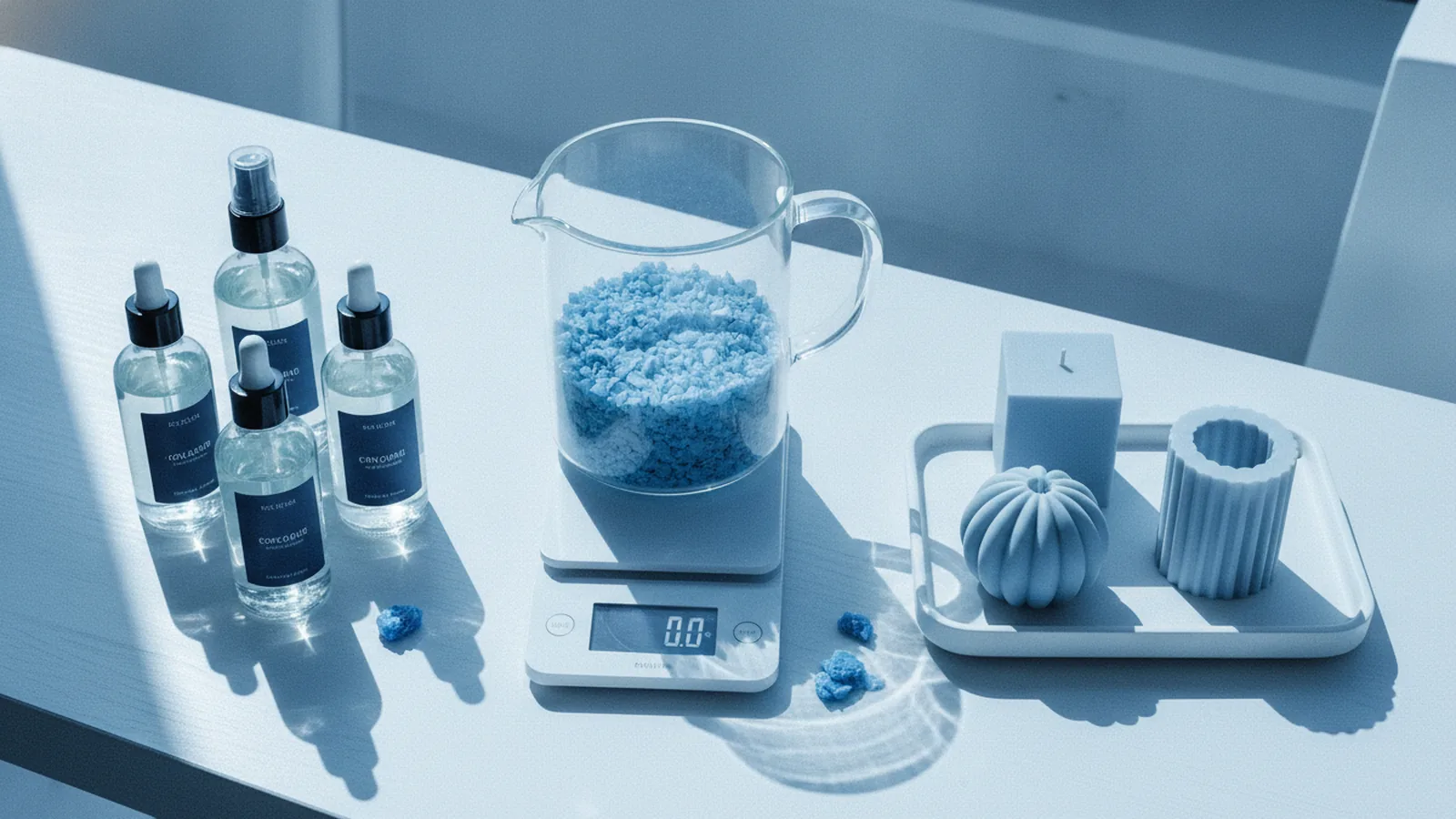
How to Start a Wax Melt Business
To start a wax melt business, choose safe supplies, test each scent, price every cost, and sell through more than one channel. Wax melts need less gear than candles. They also encourage repeat orders because customers use them often. Start with a small range of scents and shapes. Then grow from real customer feedback.
Your first goal is not a huge product range. Your goal is a safe, steady product that smells good each time. Plan a small launch with four to six scents. Make one batch of each scent. Track the cost, cure time, test results, and buyer feedback.
This wax melt business guide covers the full path from idea to first sale. It also shows how to avoid common pricing and stock mistakes.
Wax Melts and Candles Are Not the Same Product
Wax melts are scented wax pieces that warm in a wax burner. They do not have a wick or a flame in the melt itself. Customers place a few pieces in a burner. A tea light or electric heater then warms the wax.
Candles need wick tests, burn tests, and glass checks. Wax melts need melt, scent, and heat tests. This difference changes your tools, risks, and product notes. It also makes wax melts simpler for many new makers.
Wax melts can have a low startup cost. You may begin with a wax pot, scales, moulds, wax, fragrance, labels, and bags. A small first order can cost a few hundred pounds or dollars. Your exact cost depends on your country, batch size, and supply quality.
Repeat sales can be strong. Buyers often try new scents after finishing an old pack. Seasonal scents can add fresh demand without changing your core range.
- Wax melts need no wick or candle jar
- Small batches help limit early stock risk
- Customers can mix scents and reorder often
- Each scent still needs careful testing
Choose Wax, Fragrance, and Basic Supplies
The wax type affects scent, look, firmness, and melt time. Soy wax is popular with makers who want a plant-based option. It can give a soft finish and may show frost. Paraffin wax often gives strong scent release and a smooth look.
Coconut wax can give a soft, rich finish. It is often blended with other waxes for strength. Blends may suit wax melts better than one wax alone. Ask the supplier for the correct use range and heating advice.
Fragrance oils need the same care. Buy oils made for wax products from a trusted supplier. Check the safety data and recommended fragrance load. The fragrance load is the oil amount compared with the wax weight.
More oil does not always mean more scent. Too much oil can cause poor setting, sweating, or weak performance. Follow the supplier limit first. You can review IFRA's fragrance safety standards for wider safe-use guidance.
Keep your first supply list short. Buy a good scale that reads in grams. Add a heat-safe jug, thermometer, stirring tool, moulds, gloves, labels, and packing bags. Use separate tools for fragrance work. Keep your work area clean and dry.
- Wax suited to melts
- Wax-safe fragrance oils
- Digital scales and a thermometer
- Melting pot or heat-safe jug
- Silicone moulds and storage trays
- Labels, bags, boxes, and warning notes
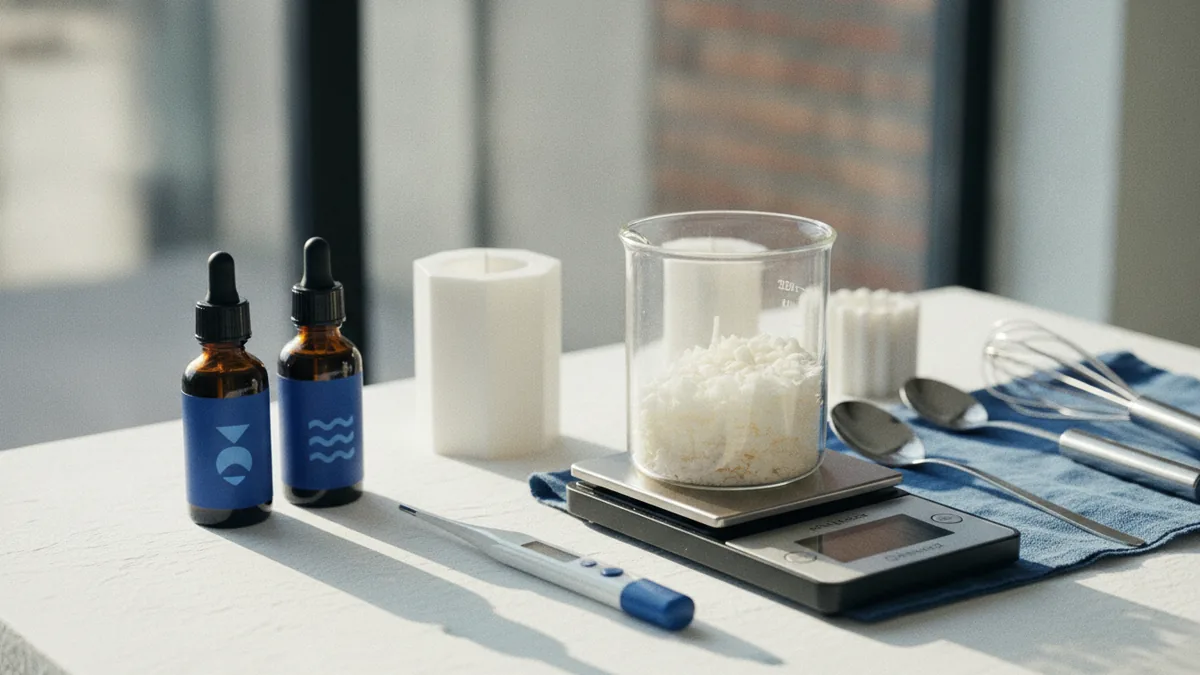
Develop and Test Each Wax Melt Recipe
Recipe development starts with one wax and one fragrance. Do not change three things at once. A simple test might use 500 grams of wax and 40 grams of oil. That is an 8% fragrance load.
Record the wax brand, oil brand, load, melt temperature, pour temperature, and cure time. Write down the mould used too. These notes help you repeat a good result. They also show what changed when a batch fails.
Let each test set fully before judging it. Many melts need several days before the scent settles. Test the melt in the same type of burner each time. Use the same room size and the same number of pieces.
Check cold throw first. This means the scent before heating. Then check hot throw while the melt warms. Note how fast the scent spreads. Watch for smoke, bubbling, poor setting, surface oil, or a scent that fades too soon.
Ask at least three people to test your best samples. Give them short questions. Ask about scent strength, scent style, melt life, packaging, and likely price. Keep only scents that pass your safety and quality checks.
- Make one small test batch
- Label every test with full details
- Cure the melts for the same time
- Test cold and hot scent throw
- Record feedback and adjust one factor
- Approve the recipe before selling it
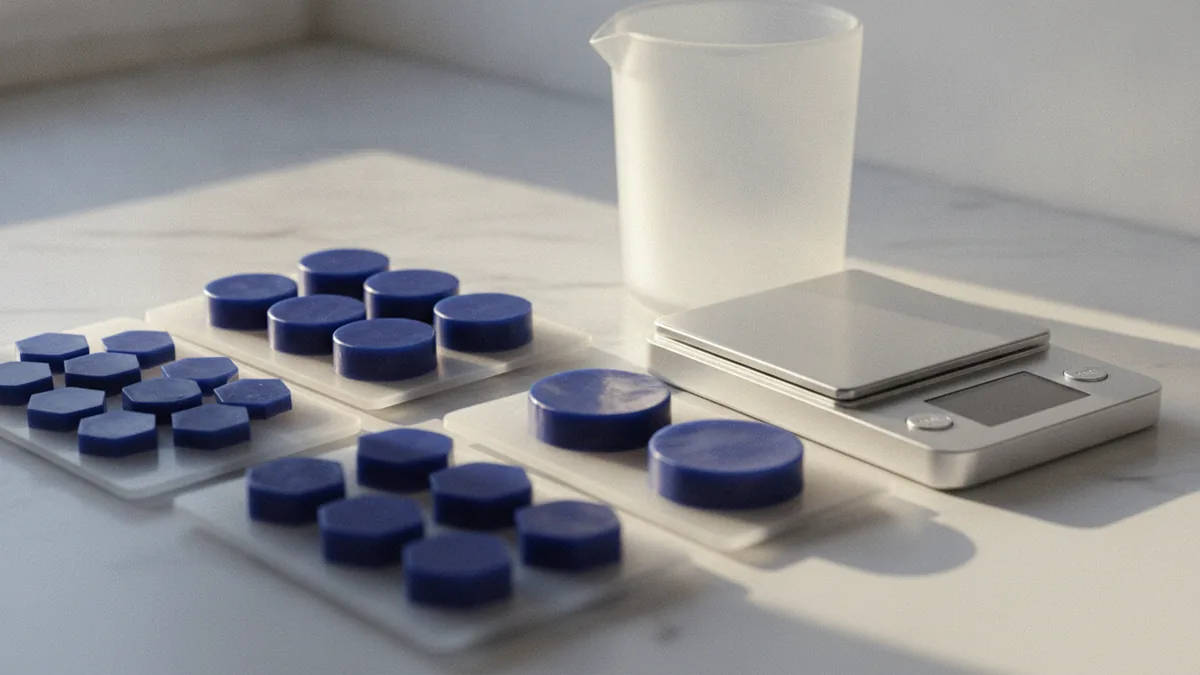
Calculate the True Cost of Every Batch
Good cost calculation includes more than wax and fragrance. Add labor, packaging, labels, power, rent, tools, payment fees, and waste. These costs shape your real profit. A low supply cost can hide a weak margin.
Start with the full batch cost. For example, a batch may use 1,000 grams of wax at $8. It may use 80 grams of oil at $10. Add $12 for packaging and labels. Add $25 for labor and $5 for overhead.
The batch total is $60. If it makes 25 packs, each pack costs $2.40. If three packs fail testing, the cost per sellable pack rises to $2.73. This is why waste belongs in your maths.
| Cost item | Example cost |
|---|---|
| Wax | $8 |
| Fragrance oil | $10 |
| Packaging and labels | $12 |
| Labor | $25 |
| Overhead and power | $5 |
| Total batch cost | $60 |
Use a sheet for each scent and pack size. Update prices when suppliers change their rates. Include platform fees and postage in your sales channel maths. Your figures should reflect the business as it runs now.

Set a Price That Leaves Room for Profit
Pricing should cover true cost and fund future growth. It should also match the value buyers see. A handmade pack with strong scent, neat packing, and clear use notes can command more than a basic product.
One simple method uses a markup. If one pack costs $2.73 and you use a 2.5 times markup, the base price is $6.83. You may then add a fee buffer or round the price to $7.
A margin is different from a markup. A $7 price and a $2.73 cost leave $4.27 before other fees. That equals about 61% gross margin. Gross margin means sales income left after direct product cost.
Check the final price after marketplace fees, payment fees, discounts, and postage. A 10% sale can cut your earnings fast. Set a minimum price before launching. Keep wholesale pricing separate from direct sales pricing.
- List every direct and hidden cost
- Set a target gross margin
- Add fees and waste to the price check
- Test price points with small batches
- Review prices when costs change
Choose Sales Channels That Fit Your Stage
Etsy can help new makers reach shoppers who already seek handmade goods. It also brings listing fees and strong competition. Use clear scent names, honest photos, useful details, and fast replies.
Craft fairs let buyers smell products before they buy. Bring best sellers, sample packs, tester strips, and a clear price board. Track which scents draw attention. Ask buyers how they found your stall.
A personal website gives you more control over your brand and customer list. It needs setup work, payment tools, product pages, and traffic. It can become your main sales home as repeat orders grow.
You do not need every channel on day one. Start with one online channel and a local event. Add your own site when you can manage stock and orders well.

Market Your Wax Melt Business
Show the product in use, not only in a plain pack. Share scent notes, melt size, room tips, and care advice. Short videos can show the pour, pack, or scent range without making grand claims.
Build a clear brand around a buyer. You might serve gift buyers, pet owners, cosy-home fans, or seasonal shoppers. A clear buyer helps you choose scents, photos, colours, and post ideas.
Use email to bring back past buyers. Offer a restock note or early access to a seasonal scent. Ask for reviews after delivery. Keep a record of which scents drive repeat orders.
Bundle products to raise order value. Try a discovery box with six small packs. Add a best-seller set for new buyers. Keep bundle savings small enough to protect your margin.
For starting a wax melt business, steady testing beats a rushed launch. Make a small range, learn what sells, and improve each month. These wax melt business tips can help you build a safer, clearer, and more profitable shop.
Step-by-step
- 01 Choose a small product range
Pick four to six scents and one or two pack sizes. Keep the first stock run small.
- 02 Buy tested supplies
Choose suitable wax, wax-safe fragrance oils, moulds, scales, labels, and packing materials.
- 03 Make and record test batches
Record each formula, temperature, load, and cure time. Change one factor per test.
- 04 Check quality and safety
Test cold scent, hot scent, melt time, finish, packaging, and use notes before launch.
- 05 Cost and price each pack
Add all inputs, fees, waste, and labor. Set a price that leaves your target profit.
- 06 Launch through two channels
Start with one online marketplace and one local event. Track sales, feedback, and repeat orders.
- 07 Market and improve
Share useful product content, gather reviews, and restock scents that buyers want.
Frequently asked questions
- How much does it cost to start a wax melt business?
- A small launch can cost a few hundred dollars or pounds. Your total depends on wax, tools, packaging, stock size, and local rules.
- What is the best wax for wax melts?
- Soy, paraffin, and coconut blends can all work well. Choose based on scent throw, firmness, finish, supplier guidance, and buyer needs.
- How much fragrance oil should I use in wax melts?
- Test the oil within the supplier's stated load range. A common test may use 8% oil, but the right level varies by wax and fragrance.
- Are wax melts easier to make than candles?
- Yes, but candles need wick and burn testing. Wax melts need melt, scent, heat, and packaging tests instead.
- Where can I sell homemade wax melts?
- Etsy, craft fairs, and your own website can all work. Start with one online channel and one local sales route.
- How do I price wax melts for profit?
- Add wax, fragrance, labor, packaging, overhead, waste, payment fees, and postage. Then set a price that meets your target margin.
Related reading

Business Applications — The Software Behind Daily Work
See how business apps support daily work, team goals, and better decisions.

Consulting Jobs — Roles, Skills, and How to Get Started
See what consultants do, which skills matter, and how to enter the field.

Build Stronger Business Relationships Through Networking
Make business networking more useful, natural, and lasting.