How to Start an Egg Business: The Practical Guide
A step-by-step guide to start an egg business, from demand to rules and marketing.
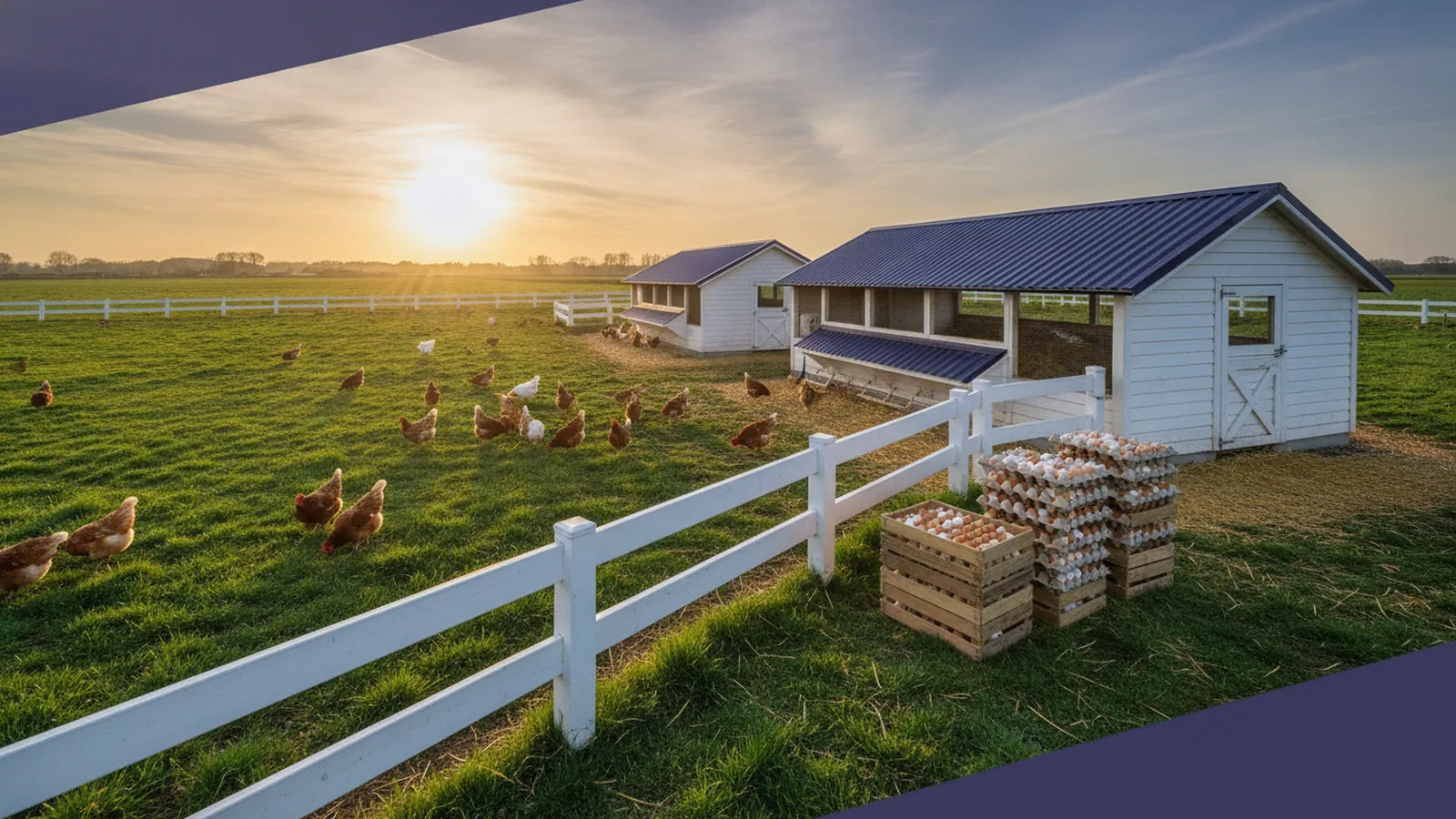
Understanding the egg business
If you want to learn how to start an egg business, focus on three outcomes. First, steady egg supply. Second, reliable product quality. Third, repeat buyers who trust your farm.
Egg businesses range from a few backyard flocks to medium-sized poultry farming operations. Your model changes your costs, staffing needs, and where you can legally sell. Many new owners begin with local food systems, farmers markets, and small grocery partnerships.
Before you buy chickens, sketch a simple plan. Include target customers, expected flock size, and what you will do with unsold eggs. Also decide your niche, such as free-range eggs or organic egg production, because that affects both costs and marketing.
- Supply: how many hens you will keep and for how many months they will lay.
- Quality: feed, nesting, egg handling, and storage.
- Sales: retail, direct-to-consumer, or wholesale.

Researching market demand
Market research is how to start an egg farm business without guessing. Start by mapping buyers within driving distance of your farm. Look at farmers markets, local grocers, bakeries, and restaurants that use eggs.
Then estimate demand using simple signals. Check how often eggs sell out at markets. Call three retailers and ask about shelf demand and delivery expectations. If you can, track online posts from local buyers who ask for specific egg types.
Use demand numbers to size your start. A common planning approach is to estimate eggs per hen per week, then apply your expected sell-through rate. Even without perfect data, you will know whether 100 hens or 300 hens makes sense.
- List 20 local sellers and ask about egg availability and pricing.
- Record what they carry: regular, free-range, organic, or mixed.
- Ask about package sizes, delivery days, and return rules for damaged eggs.
- Estimate monthly demand and compare it to your expected production.
Also study your price competition. If most sellers are cheap commodity eggs, your edge must be location, freshness, or special positioning like free-range eggs. If buyers pay more for quality, you can justify higher feed and labor costs.

Choosing the right breed of chickens
Choosing the right breed is central to how to start an egg production business. Egg layers differ in rate, consistency, and how they handle weather. You want hens that lay well in your climate and keep production stable.
Common egg-laying breeds include Leghorns, which are known for high production, and Rhode Island Reds, which mix strong laying with hardiness. Plymouth Rock hens are also popular for steady performance and calmer behavior. If you want a heritage look while still aiming for good laying, consider breeds often used in small farms.
For free-range or organic egg production, breed choice still matters. Hens that forage well may reduce feed costs slightly, but they still need balanced feed for quality shells and yolks. Your housing and pasture design will often matter as much as the breed.
| Breed type | Best fit | What to watch |
|---|---|---|
| High-producing layers | Max output per hen | Need stable housing and careful feed |
| Hardy dual-purpose lines | Small farms and mixed goals | Egg output may be lower than specialists |
| Calm heritage layers | Families and low-stress handling | Check local availability of chicks |
- Start with one or two reliable breeds to simplify feed and management.
- Buy from a supplier that can tell you laying timelines.
- Plan for a replacement cycle, not only today’s production.
Setting up your egg production
Setup is where most costs show up when you plan how to start an egg selling business. Your biggest line items are housing, fencing, feed system, egg collection, and storage. You also need biosecurity in poultry, because disease can wipe out a flock fast.
A practical way to plan is to build a workflow. Hens live in a clean, protected area. Eggs get collected on schedule. Eggs get cleaned if needed, then stored at safe temperatures. Then you pack for customers.
Essential equipment usually includes a coop or hen house, nesting boxes, drinkers, feeders, and a reliable egg-collection setup. You will also need a thermometer for storage areas, crates or cartons for transport, and a way to label your batches.
Typical startup cost categories
Costs vary by country, site prep, and whether you buy ready-made structures. Still, budgeting by category helps you avoid surprises. Many first-time poultry farming setups spend most of their budget on infrastructure, then much less on recurring feed.
- Housing and fencing: coop, run, predator protection, and gate hardware.
- Water and feed: feeders, drinkers, and storage bins.
- Egg handling: nesting, egg trays, crates, and storage shelves.
- Health tools: scales, record sheets, disinfectants, and gloves.
- Site prep: bedding, drainage, and waste management materials.
- Working capital: feed and supplies for the first 6 to 10 weeks.
Biosecurity essentials
Biosecurity in poultry protects your investment. Use a simple entry routine. Keep visitors away from bird areas when possible. Control rodents and manage litter so damp spots do not build.
Also set up clean and dirty zones. For example, keep feed storage separate from the coop. Wash hands between chores, and avoid moving equipment from one flock area to another.
- Designate a footbath or boot-cleaning routine.
- Use dedicated tools for egg collection and coop cleaning.
- Quarantine new birds before they join the main flock.
- Track flock health with short daily notes.
Legal requirements and licensing
Legal rules can decide whether you can sell at all, so treat them as part of your how-to plan. Requirements vary by location, but egg production usually involves food safety rules and animal health rules. You may also need permits for farm signage, inspections, or handling at a retail site.
Start by contacting your local agriculture or health department. Ask what rules apply to selling eggs to consumers and retailers. You will likely need guidance on labeling, egg washing rules, temperature control, and record keeping.
If you plan organic egg production, additional certification rules may apply. Plan the timeline early, because certification can take months and requires documentation. For free-range eggs, you may also need proof about outdoor access.
- Ask about licensing for poultry farming and direct sales.
- Confirm whether you need an inspection for storage and packing.
- Learn labeling rules for farm name, lot info, and egg grade.
- Document flock health and feed sourcing where required.
If you are unsure which agency to call, begin with your national agriculture portal, then follow links to local offices. It is faster than searching rules by keyword alone.
Marketing your egg business
Good egg marketing techniques focus on trust and convenience. Eggs are perishable, so customers care about freshness and consistent availability. Make your offer clear, like regular eggs, free-range eggs, or organic egg production, and match it to your buyers’ expectations.
To start, choose one primary sales channel. Farmers markets build a base quickly and teach you what customers want. Direct online orders can work if you can deliver reliably. Wholesale can scale, but it raises packaging and delivery standards.
Your product presentation matters. Use clean cartons, clear lot or farm identification, and consistent pricing. Offer simple sizes, like 6 and 12 packs, and include a note about how you raise your hens.
- Create a short pitch: who you are, what you raise, and why your eggs taste better.
- Offer tasting or sample bundles early, then upsell to subscription delivery.
- Track which customers buy which type, then adjust your next flock mix.
- Post harvest schedules and sold-out updates to reduce buyer frustration.
If you are building sustainability messaging, keep it grounded. Local food systems feel real when you show pickup options, delivery routes, and pasture care. Avoid vague claims. Show daily routines like bedding management and egg handling standards.
Tips for success in egg farming
Success in poultry farming comes from routines. The best farms have a daily checklist, even if they do not call it that. Eggs need frequent collection, and hens need consistent feed, water, and clean nesting areas.
Maintain chicken health with observation, not guesswork. Watch for changes in eating, droppings, and feather condition. Many problems start small, like damp bedding or uneven nutrition, and can become bigger if you ignore them.
Egg quality depends on storage and handling. Collect eggs regularly, avoid leaving them warm in the coop too long, and store them properly. If you handle broken shells, remove damaged eggs quickly and sanitize tools.
- Collect eggs at least daily and keep them out of direct sun.
- Clean nesting boxes and refresh bedding on schedule.
- Keep feed dry and use rotation to reduce stale feed.
- Record daily egg counts to spot production drops early.
Finally, plan your grow path. Start small if your goal is how to start an egg selling business with low risk. Scale when you have stable demand and proven operations, not when you feel ready.
If you want to scale faster, focus on one bottleneck at a time. It might be packaging capacity, delivery routes, or storage space. Fix one constraint, then add hens.
Frequently asked questions
- How much money do I need to start an egg business?
- Your biggest costs are housing, fencing, and egg packing supplies. Plan also for at least 6 to 10 weeks of feed before your first steady sales.
- What are the best chicken breeds for egg production?
- Many small farms use specialist layers like Leghorns for high output. Others choose hardy breeds like Rhode Island Reds for steady performance in tough weather.
- What equipment is essential for egg farming?
- You need a safe coop, nesting boxes, feeders, drinkers, and an egg collection setup. Add storage temperature control, cartons, and basic health tools for daily checks.
- What legal requirements apply when selling eggs?
- Rules vary by location, but you should expect food safety, storage, and labeling requirements. Contact your local agriculture or health office to confirm permits and inspection needs.
- How do I market eggs without a big budget?
- Start with farmers markets and nearby buyers you can deliver to reliably. Use clear packaging, consistent pricing, and simple messages about freshness and your raise method.
- How can I keep chickens healthy and eggs high quality?
- Use daily observation, clean nesting areas, and dry bedding. Collect eggs regularly and store them correctly to protect shell quality and freshness.
Related reading

Start a Mobile Drug Testing Business (Without a Lab)
Build a mobile testing service with sound training, lab links, and clear pricing.

Start a Business with a Problem Worth Solving
Turn a useful idea into a business with clear steps, sound research, and steady resolve.

Loft Conversion Timelines — What Affects the Build
Typical build times range from four to twelve weeks, plus planning and setup.