How to Start and Run a Successful Textile Business
A practical guide to launching, growing, exporting, and recycling textiles.

Understand the Textile Industry Before You Start
To start a textile business, choose one clear customer, product, and sales path. You may make fabric, sell finished goods, ship products abroad, or recover textile waste. Each model needs different tools, staff, permits, and cash. Start with one model before adding more.
The textile industry covers fibers, yarn, fabric, clothing, home goods, and waste recovery. It supports large supply chains and many skilled jobs. Common business types include mills, cut-and-sew shops, fabric stores, export firms, and recycling plants. Your choice will shape every later decision.
- Manufacturing: Make yarn, fabric, garments, or home textiles.
- Retail: Sell fabric or finished goods through shops and online stores.
- Exports: Buy or make goods for buyers in other countries.
- Recycling: Collect, sort, reuse, or process old textiles.
Study the full textile production process before you invest. It may include fiber selection, spinning, weaving, dyeing, cutting, sewing, packing, and shipping. Some firms control all steps. Others focus on one step and buy the rest from trusted suppliers.
Research Your Market and Pick a Strong Niche
Market research shows who will buy your product and why. Start with five questions about your target market. Ask what people buy, how often they buy, what they pay, and where they shop. Then study three direct rivals and three firms with a similar audience.

Customer details matter more than broad labels. A hotel buyer may value bulk supply and fixed delivery dates. A young online shopper may care more about fit, style, and easy returns. A garment maker may need exact fabric weight, color cards, and small order sizes.
Test demand before buying costly machines or large stock. Send sample packs to ten likely buyers. Run a small online sale with two product styles. Track replies, sample use, repeat orders, and price objections. These results give you better data than broad guesses about textile industry trends.
- Define one main buyer group and one secondary group.
- List the buyer's top three needs.
- Set a price range from real rival offers.
- Test samples before placing a large stock order.
Pick a niche that fits your skills and cash. For example, you might sell workwear fabric to local makers. You could also make low-waste bags for small shops. A narrow offer makes brand positioning in textiles much easier.
Build a Practical Textile Business Plan
A business plan turns your idea into a set of choices. It should name your product, buyer, price, sales route, and launch date. Add a short rival review and a plan for repeat sales. Keep the first version clear enough to guide weekly action.
Your money plan needs more than machine costs. Include rent, power, staff, samples, packaging, freight, insurance, taxes, and stock. Estimate a break-even point. For example, if fixed costs reach $6,000 each month and each order earns $30, you need 200 orders to cover those costs.
Plan cash flow by month for the first year. Textile buyers may ask for long payment terms. Suppliers may ask for cash before production. Keep a cash reserve for at least three months of fixed costs. Set a stock limit so slow colors do not trap your funds.
| Plan area | What to define |
|---|---|
| Product | Fiber, quality, size, color, and use |
| Buyer | Customer type, need, budget, and location |
| Sales | Shop, website, wholesale, or overseas agent |
| Costs | Stock, tools, labor, rent, freight, and taxes |
| Targets | Orders, sales, margin, and cash balance |
Set Up Production, Sourcing, and Legal Checks
Choose whether to make goods, outsource them, or use both paths. Visit suppliers when possible and request samples from each one. Check fiber content, fabric weight, color fastness, shrinkage, and seam strength. Put quality limits in writing before your first order.
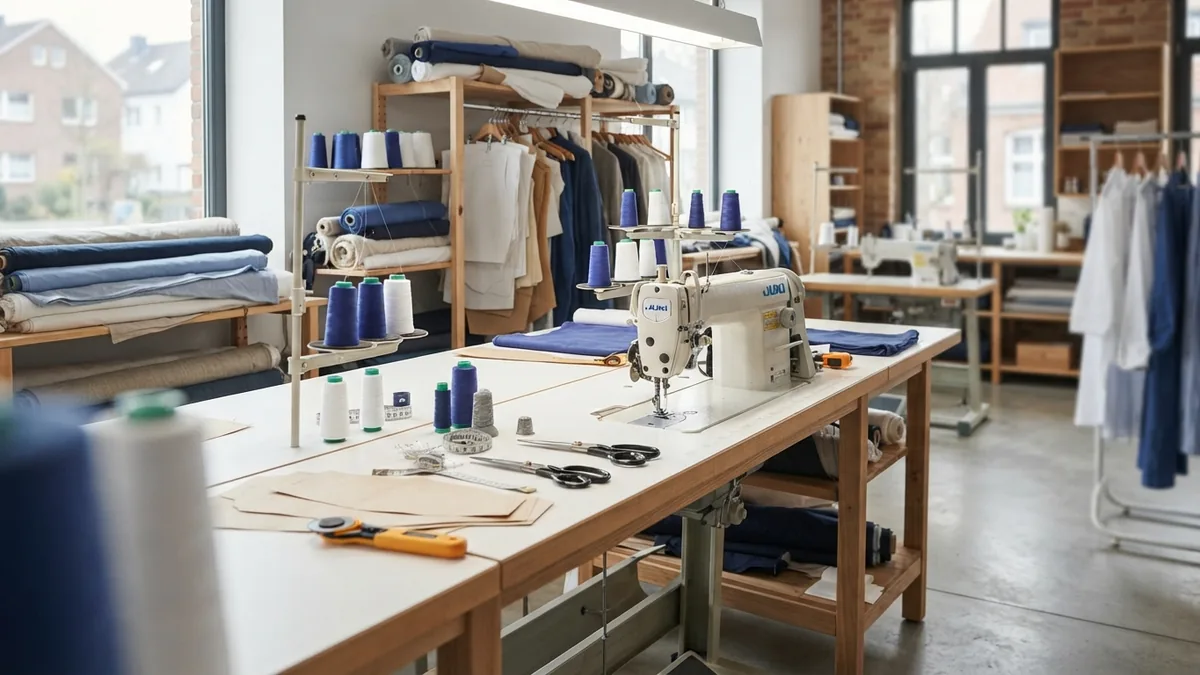
Good supply chain management starts with clear records. Track supplier names, lead times, minimum order sizes, defect rates, and payment terms. Keep a second source for key materials. One late yarn shipment can stop a small factory.
Use simple digital tools from day one. Stock software can show what you have and what you need to order. Barcode scans can cut counting errors. Production tools can track waste, machine time, and order status. Online sales tools can link stock levels with customer orders.
Check local rules before trading. You may need business registration, a tax number, zoning approval, and fire checks. A dyeing site may need water, air, and waste permits. Confirm labor, safety, labeling, and product rules with your local authority. Rules vary by country and by product.
- Register the firm and check tax duties.
- Confirm site, fire, worker safety, and waste rules.
- Check labels for fiber content, care, size, and origin.
- Insure stock, equipment, workers, and product risk.
Hire for the risks you cannot manage alone. A skilled pattern maker can cut waste. A quality lead can stop faulty goods early. An accountant can track margins and tax dates. Small teams need clear roles, even when one person holds several jobs.
Market Your Textile Brand and Win Orders
Show the product in use, not just on a plain background. Share close views of weave, texture, fit, and finish. Explain wash care, lead time, minimum order size, and return terms. Clear details help buyers trust a new textile firm.
Use a mix of direct and digital marketing for textiles. Visit trade fairs and local maker events. Send a short sample kit to trade buyers. Build a site with product sheets, test results, prices, and a simple order form. Post short videos that show cutting, sewing, packing, or repair work.
Measure each sales route with a few useful numbers. Track sample-to-order rate, cost per lead, average order value, and repeat order rate. A paid ad that brings 40 leads may look good. It fails if only one buyer places a small order.
Build trust through proof. Add buyer reviews, care guides, test reports, and clear delivery dates. Share the source of recycled fibers when you make that claim. Avoid vague terms such as “green” without facts. Strong proof supports long-term customer acquisition.
- Create one product page for each main use.
- Use samples to start wholesale talks.
- Send useful email updates, not daily sales messages.
- Review sales data each month and drop weak channels.
Learn How to Start a Textile Export Business
Export work adds new buyers, rules, and risks. Start with one product and one target country. Check demand, local prices, import taxes, labeling rules, and buyer habits. A freight agent and customs broker can help you avoid costly errors.
Ask buyers which delivery term they expect. This term sets who pays for freight, insurance, and border costs. Confirm the product code, invoice data, packing list, and origin papers. Use a written sales contract that covers defects, payment, delivery, and dispute steps.
Protect cash before you ship. New buyers may need a deposit or secure payment method. Check currency risk when prices stay open for many weeks. Get cargo insurance for high-value loads. Begin with a small shipment and inspect the full process.
To learn how to start textile export business work, build a country file for each market. Record buyer names, duties, documents, port times, and payment risk. Review export regulations with your trade ministry or a trusted customs expert. Never copy forms from an old shipment without checking the current rules.
- Choose one product and target country.
- Check demand, duties, labels, and import rules.
- Find a broker, freight partner, and buyer.
- Agree on price, delivery terms, and payment.
- Send a small test shipment.
Build a Textile Recycling Business with Care
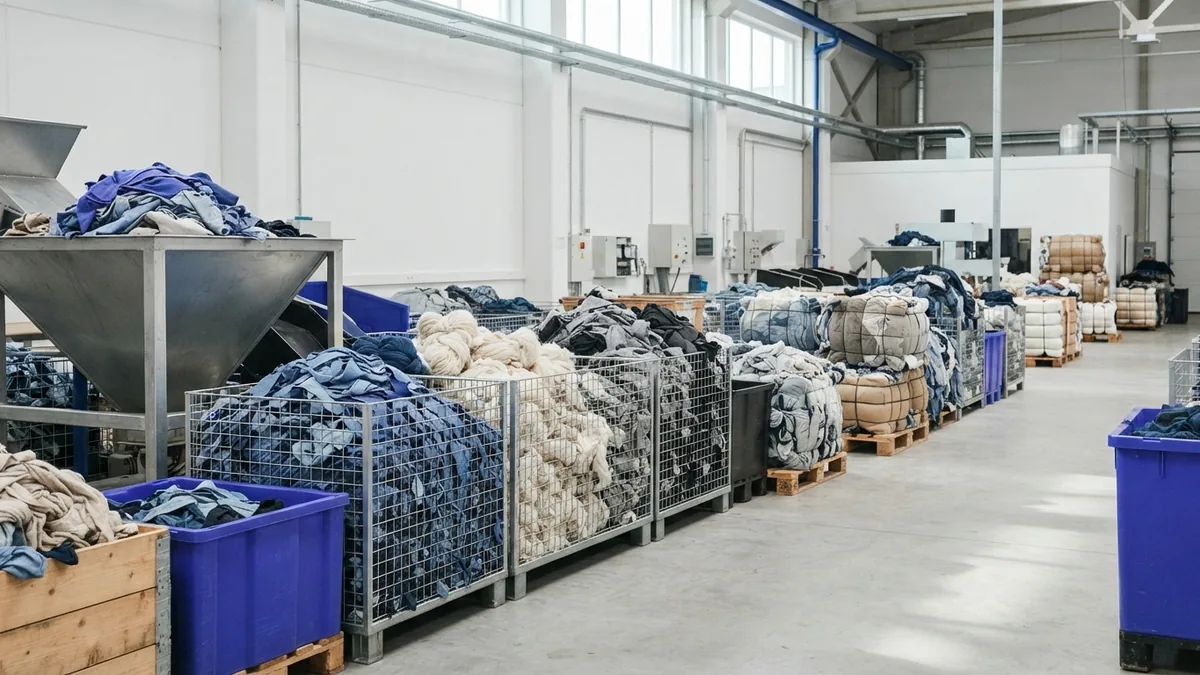
A textile recycling business can collect old clothing, factory scraps, and damaged stock. It may resell usable items, turn scraps into rags, shred fibers, or make new yarn. Each route has a different buyer and cost base. Decide your output before you buy sorting or shredding equipment.
Set rules for intake and sorting. Separate natural fibers, synthetic fibers, blends, wet goods, and unsafe items. Remove zips, buttons, and hard parts when your process needs clean fiber. Weigh each batch and record its source, grade, output, and loss.
Start with reuse when the item still has value. Reuse often needs less power than fiber recovery. Send damaged goods to the right process instead of mixing every material. Blended fabric can be hard to split, so price it with care.
Sustainable textiles need proof, not just good claims. Measure water, power, transport, waste, and rejected loads. Use safe storage to prevent mold and fire risk. Train staff to handle dust, dyes, and sharp parts. Share clear recovery rates with buyers and partners.
- Secure steady supply from factories, shops, or local drop points.
- Set grades for resale, reuse, rag use, and fiber recovery.
- Track weight from intake through final sale.
- Sell each output to a known buyer before scaling.
Run the Business with Simple Checks
Review five numbers every week: sales, gross margin, stock days, defects, and cash. Gross margin shows what remains after direct product costs. Stock days show how long goods sit before sale. Defect data points to weak suppliers or weak work steps.
Set a weekly production meeting with one page of data. Check late orders, missing supplies, quality issues, and customer feedback. Give each problem one owner and one due date. Small fixes made early protect both cash and trust.
Scale only after the first model works. Add machines when orders stay above your current output for several months. Add export markets after local delivery runs well. Add recycling lines after you can sort and sell steady input. Growth should follow proof.
Step-by-step
- 01 Choose a textile business model
Pick manufacturing, retail, export, recycling, or a focused mix. Define one product and one main buyer.
- 02 Test the target market
Study rivals, prices, buyer needs, and sales channels. Send samples or run a small sale before scaling.
- 03 Write the business plan
Set costs, prices, cash needs, sales goals, suppliers, and launch dates. Include a break-even target.
- 04 Check legal and site needs
Register the firm and confirm tax, zoning, safety, fire, waste, labor, and label rules.
- 05 Set up supply and production
Approve suppliers, set quality checks, track stock, and plan a backup source for key materials.
- 06 Launch and measure
Use samples, trade events, online sales, and useful content. Review sales, margin, defects, stock, and cash each week.
Frequently asked questions
- How do I start a textile business with limited money?
- Choose one product, target buyer, and sales route. Then test demand before buying machines or large stock.
- What should a textile business plan include?
- A plan should cover your product, buyer, rivals, prices, costs, cash flow, sales route, and first-year targets.
- What licenses are needed for a textile business?
- You may need business registration, tax setup, zoning approval, fire checks, safety permits, waste permits, and product labels.
- How do I start a textile export business?
- Start with one product and country. Check duties, labels, customs papers, payment risk, and delivery terms before shipping.
- How do I start a textile recycling business?
- Choose a clear waste stream, sort materials by grade, secure buyers, and track weight from intake to final sale.
- How can technology help a textile business?
- Use stock tools, barcode scans, production tracking, online orders, and sales data to cut errors and improve delivery.
Related reading

Loft Conversion Timelines — What Affects the Build
Typical build times range from four to twelve weeks, plus planning and setup.

Get a Small Business Tax ID (EIN and State Rules)
Get an EIN from the IRS for free, then check your state’s tax ID rules.

Business Management Courses — Skills, Degrees and Careers
Explore the subjects, skills, degrees, and career paths in business management.