How to Start a Successful CPR Training Business
Build a CPR training business with the right skills, plan, and local reach.

Understand the CPR Training Business
To start a CPR business, first prove that people nearby need your service. Schools, care homes, gyms, offices, clinics, and sports clubs all need trained staff. Some clients need group classes for work rules. Others need a first course for a job, license, or volunteer role.
Start with a simple local study. List nearby employers, schools, health sites, and fitness centers. Call ten likely buyers and ask about class size, course type, price, and timing. This gives you better facts than broad online searches.
Most CPR firms sell on-site classes to teams. Others run public classes from a rented room. A few serve both groups. Your first goal is a clear offer for one client type.
- Workplace CPR and First Aid classes
- School staff and child care courses
- Healthcare support and renewal classes
- Gym, sports club, and pool staff training
- Public classes for parents and local groups
Meet the Main Requirements Before You Open
Strong teaching starts with your own skills. Complete a CPR and First Aid course before you seek instructor status. Pick a course that fits the clients you plan to serve. For example, child care sites may need adult, child, and infant skills.
Choose a known group with clear course rules. The American Red Cross and American Heart Association are common choices in the United States. Their course paths, cards, and instructor rules differ. Review the American Red Cross CPR course options before you choose a path.
You also need a sound business base. Check city, county, and state rules before taking payment. Rules may cover business names, tax accounts, permits, records, and insurance. A local lawyer or tax adviser can spot gaps early.
- Select a business name and check its use in your area
- Choose a sole proprietorship, partnership, or LLC
- Check local permits and state business licenses
- Open a separate bank account for the business
- Buy general and professional liability cover
Complete the Certification and Licensing Path
Most instructor paths have more than one stage. First, earn a current CPR and First Aid card. Next, meet the certifying group's entry rules. Then complete an instructor course and any required practice teaching.
Many groups also ask for a skills check. Some require a monitored teaching session. You may need a current provider card while you teach. Follow the exact rules from your chosen group.
Instructor status does not replace local business approval. A course card shows teaching skill. It does not form a company or grant a local permit. Keep those duties separate.
Ask the certifying group these questions before you pay:
- Which provider card do I need first?
- What instructor course fits my planned classes?
- How often must I renew my instructor status?
- Can I teach at client sites or only at approved sites?
- What records must I keep for each class?
Choose a Business Model That Fits Your Market
Your model shapes your costs, schedule, and sales plan. A mobile service travels to client sites. It can win group work because the client avoids travel. Yet travel time can cut your daily class count.
A fixed site gives you more control. You can store gear and run set class times. Rent adds a steady cost, though. A shared room may work well during your first six months.
You can also use a mixed model. Run public classes at set times, then book workplace sessions on other days. This mix can smooth cash flow. Test one model before you sign a long lease.
| Model | Best fit | Main cost |
|---|---|---|
| Mobile classes | Workplaces and schools | Travel and spare gear |
| Fixed classroom | Public and repeat classes | Rent and room setup |
| Mixed service | Several client groups | Scheduling and storage |
Set prices from your full cost, not from guesswork. Add teaching time, travel, gear wear, card fees, rent, insurance, and tax. Then set a minimum class fee. A class with three students may still need the same travel and setup time.
Build a Lean Setup for Safe, Clear Classes
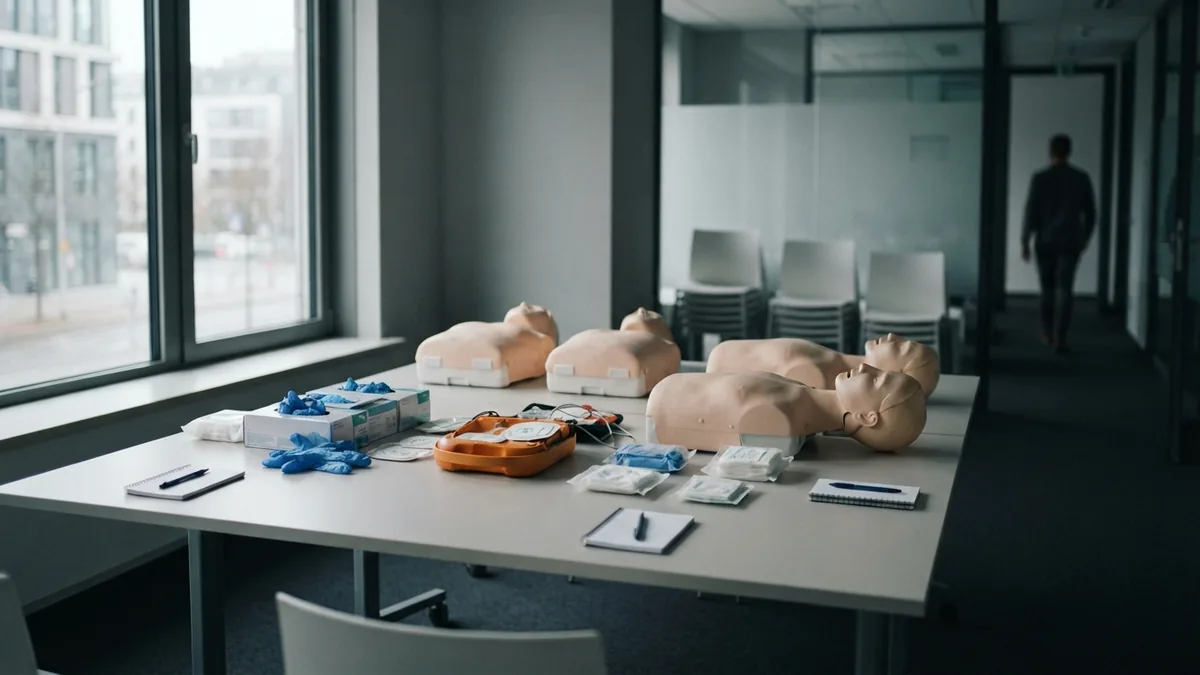
Buy gear that supports the courses you teach. Most new firms need adult manikins, child manikins, infant manikins, AED trainers, masks, gloves, and cleaning supplies. You also need course books, skills check tools, and a way to track cards.
Start with enough gear for your target class size. For an eight-person class, plan for several practice stations. Students learn more when they spend less time waiting. Ask your certifying group which gear meets its course rules.
Create a repeatable class plan. Set arrival times, breaks, skill checks, and card delivery steps. Keep a sign-in record for each class. Store private client data in a safe system.
- Use a written setup and pack-down checklist
- Inspect manikins and AED trainers before each class
- Keep spare batteries, masks, and gloves on hand
- Record attendance, skills checks, and card dates
- Send a short feedback form after each session

Market Your CPR Business Locally and Online
Marketing works best when it names a clear buyer. Build one page for workplace CPR. Build another for child care or gym staff. Each page should show the course, class length, group size, service area, and booking method.
Use local search to reach buyers who need help now. Keep your business name, phone number, hours, and service area alike across listings. Ask happy clients for honest reviews. Do not offer rewards for positive reviews.
Local outreach can bring larger contracts. Send a short note to office managers, school leaders, gym owners, and care directors. Offer a fixed group price and several dates. Follow up once after three to five business days.
Digital promotion can support that work. Share short safety tips on social media. Use paid search only after you know which service earns a profit. Track calls, forms, booked classes, and cost per lead.
- Create a Google Business Profile and local service pages
- Build referral ties with clinics, gyms, and safety firms
- Offer a renewal reminder for past clients
- Use email for seasonal staff training drives
- Track each lead source in a simple sheet
Keep Standards High After Your First Sale
CPR teaching is not a one-time learning task. Skills fade, course rules change, and equipment wears out. Set a renewal calendar for your cards and instructor status. Start renewal outreach 60 to 90 days before a card ends.
Review updates from your certifying group. The American Heart Association CPR course guide shows how its course and kit system is arranged. Use the current materials for every class.
Run a gear check each month. Replace worn pads, cracked masks, dead batteries, and old supplies. Review feedback by class and teacher. A small fix can lift safety and trust.
Keep proof of your work. Save attendance records, skill checks, card details, client notes, and gear checks. Follow the record rules from your certifying group and local law. Good records also help when a client asks for proof.
Once your base is steady, add new services with care. You might add workplace safety talks or renewal blocks. Do not add a course until you can teach it well and meet its rules.
Step-by-step
- 01 Study local demand
List schools, offices, care sites, gyms, and clinics in your service area. Speak with at least ten likely buyers about needs and class timing.
- 02 Earn provider credentials
Complete CPR and First Aid training for the client groups you plan to serve. Keep your provider cards current.
- 03 Choose a certifying group
Compare instructor paths from groups such as the American Red Cross and American Heart Association. Check course rules and renewal terms.
- 04 Set up the business
Choose a legal structure, register the business, check permits, open a bank account, and buy suitable insurance.
- 05 Buy core equipment
Purchase manikins, AED trainers, masks, gloves, course supplies, and record tools. Match the stock to your first class size.
- 06 Set prices and class systems
Count teaching, travel, gear, rent, fees, insurance, and tax costs. Create checklists for setup, teaching, records, and card delivery.
- 07 Launch local marketing
Create local service pages and listings. Contact likely buyers with clear group offers, dates, and booking steps.
- 08 Review and renew
Track feedback, inspect gear, and renew provider and instructor cards on time. Check course updates before each teaching cycle.
Frequently asked questions
- How much does it cost to start a CPR training business?
- Costs vary by class size and business model. Plan for manikins, AED trainers, supplies, instructor fees, insurance, permits, and marketing.
- Do I need to be certified to start a CPR business?
- You need the right provider and instructor credentials to teach certified courses. You may also need local business permits and insurance.
- What certification is best for a CPR instructor?
- The American Red Cross and American Heart Association are well-known choices. Compare their course rules, renewal terms, and local client demand.
- Can I run a mobile CPR training business?
- Yes. A mobile model lets you teach at offices, schools, gyms, and care sites. Add travel time and gear transport to your price.
- How do I find clients for a CPR training business?
- Build local search listings, ask for reviews, and contact schools, offices, gyms, and care sites. Offer clear group prices and easy booking.
- How often do CPR instructors need recertification?
- Renewal timing depends on the certifying group and course. Track each card date and check the current rules before teaching.
Related reading

Start a Mobile Drug Testing Business (Without a Lab)
Build a mobile testing service with sound training, lab links, and clear pricing.

Start a Business with a Problem Worth Solving
Turn a useful idea into a business with clear steps, sound research, and steady resolve.

Loft Conversion Timelines — What Affects the Build
Typical build times range from four to twelve weeks, plus planning and setup.