How to Start an IV Therapy Business
Build an IV therapy business with the right plan, care rules, and marketing.

What an IV Therapy Business Does
To start an IV business, build a licensed health service around safe, supervised infusions. Begin with a clear service menu, legal review, trained staff, and written care rules. You may run a clinic, a mobile service, or both. Your model must fit local health laws and patient needs.
IV therapy sends fluid, salts, and nutrients into the bloodstream through a vein. This route can support fast hydration and electrolyte balance. Common services include hydration, vitamin blends, and recovery infusions. Each service needs a sound clinical reason and a safe screening process.
Nurse Practitioners can gain an edge through their medical training and patient care skills. They can help shape intake, care plans, and follow-up steps. Their role still depends on state scope rules and license terms. Clinical skill must lead every business choice.
Market Demand and Room to Grow
The IV hydration therapy market has shown strong growth in recent reports. One estimate placed the market at USD 2.32 billion in 2022. It also forecast a 7.97% compound annual growth rate through 2030. Treat such figures as planning signals, not a promise of local demand.
Demand often comes from busy workers, travelers, athletes, and wellness clients. Some clients want care at home or at a hotel. Others prefer a calm clinic with set hours. Start by testing which groups live near your service area.
Study nearby clinics before you spend on gear or rent. Record their prices, hours, service mix, reviews, and travel range. Look for gaps, such as evening visits or simple hydration plans. A narrow first offer can make your launch easier.
- Map clinics within a practical travel zone
- Ask local clients which services they would book
- Compare prices for basic hydration and add-ons
- Track demand by day, time, and client type

Handle Legal and Health Rules First
Legal needs vary by state, county, and city. Some areas may require a collaborating physician for certain care models. Others may set rules for ordering, mixing, storing, and giving IV fluids. Ask a health law attorney to review your plan before you open.
You may need a business license, tax registration, clinic permits, and medical waste service. You also need rules for patient records, privacy, infection control, and emergency response. Check whether your site meets local building and health standards. Do not rely on a generic online checklist.
Define who may assess clients, order treatments, start lines, and manage reactions. Write a plan for allergies, fainting, infection, and transfer to emergency care. Keep supplies for urgent response at every care site. Review these rules with your medical director or clinical lead.
Insurance should cover professional care, general business risk, staff injury, and mobile work. Ask the insurer to confirm coverage for each service. Keep licenses, training records, consent forms, and incident notes in secure files. Good records protect clients and support steady operations.

Build a Business Plan That Can Guide Spending
A sound plan explains who you serve, what you sell, and how you will earn. Set a target area and list the client groups you can reach. Then choose a small set of core services. Add new treatments only after your team can run the first set well.
Your location plan should compare a fixed clinic with mobile visits. A clinic can build trust through a stable site and steady hours. Mobile care can lower rent and improve client ease. A mixed model may work once demand supports both channels.
Set prices from your full cost, not from a rival’s price alone. Include fluids, supplies, labor, travel, rent, software, insurance, and waste pickup. Test single visits, bundles, memberships, and group rates. Keep discounts clear so they do not hide weak margins.
| Plan area | Key question |
|---|---|
| Target market | Who has a need and can pay? |
| Service menu | Which treatments can your team provide safely? |
| Location | Will clients visit, or should staff travel? |
| Pricing | Does each visit cover its full cost? |
Set Up Space, Staff, and Equipment
A clinic needs clean treatment bays, handwashing access, secure storage, and a private intake area. A mobile team needs safe transport for fluids, supplies, and waste. Keep temperature-sensitive items within their required range. Check stock before every shift.
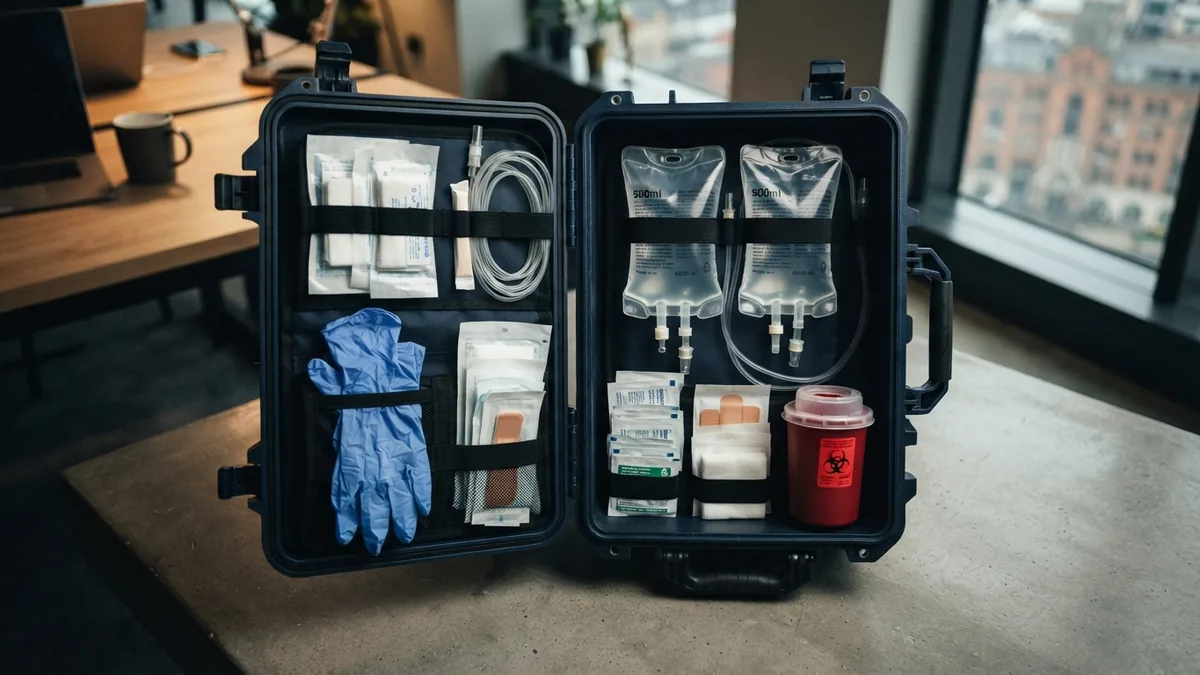
Core supplies may include IV catheters, tubing, dressings, gloves, sharps bins, and emergency kits. Use approved products from known suppliers. Track lot numbers, expiry dates, and storage checks. Replace damaged or expired stock at once.
Write operational protocols for each service. Include screening, consent, dose checks, line placement, monitoring, discharge, and follow-up. Train staff to spot warning signs and stop care when needed. Run drills before the first paid visit.
Choose software that supports booking, records, reminders, stock checks, and payment. Limit access to patient data by job role. Build a simple daily closeout routine. Small checks prevent costly gaps.
Market Your IV Services Locally
Start with a local SEO plan that names your service area and core treatments. Create a complete business profile with hours, service details, and booking options. Add clear pages for clinic visits and mobile care. Ask real clients for honest reviews after care.
Use social media to explain the visit, not to promise cures. Show your setting, staff training, safety checks, and general service flow. Keep health claims modest and supportable. Avoid posts that suggest IV care treats serious illness without medical review.
Partnerships can bring warm leads from wellness businesses. Consider gyms, spas, hotels, salons, and recovery centers. Set clear referral terms and protect client privacy. A shared event can test demand before a larger ad spend.
Measure calls, bookings, repeat visits, review growth, and cost per lead. Compare results by channel each month. Keep the channels that bring safe, profitable visits. Stop campaigns that produce clicks but no bookings.

Best Practices for Long-Term Success
Put clinical safety ahead of speed or sales. Screen every client with the same care, even during busy periods. Use a licensed clinician to review risks and treatment fit. Clear advice earns more trust than bold promises.
Make the client journey simple from booking to follow-up. Tell clients what to bring, how long visits take, and when to seek help. Send a short aftercare note after each visit. Invite questions without pushing another sale.
Review your numbers each week during the first three months. Watch visit volume, gross margin, supply waste, cancellations, and repeat bookings. Check adverse events and near misses with your clinical lead. Use those findings to improve your care rules.
Grow only when your team, stock, and cash flow can support growth. Add hours before adding a second site. Add services only after clinical review and demand testing. A careful launch creates a stronger base for future expansion.
- Keep clinical oversight active at every location
- Use written checks for screening and discharge
- Track costs by service and visit type
- Build trust through clear, modest health claims
A Practical Launch Sequence
Knowing how to start an IV drip business is easier when you follow a set order. First, confirm demand and state rules. Next, build the plan, secure clinical oversight, and price each service. Then prepare the site, train the team, and run a small launch.
This process also fits people asking how to start an IV infusion business or an IV fluids business. The terms differ, but the core work stays similar. You need legal approval, safe care, sound costs, and steady local demand. Treat each step as a gate before the next spend.
- Research demand: Map rivals, client groups, prices, and service gaps.
- Check state rules: Confirm licenses, permits, clinical roles, and physician needs.
- Write the plan: Set services, location, pricing, costs, and sales goals.
- Build clinical systems: Create screening, care, record, stock, and emergency rules.
- Prepare the launch: Hire staff, buy supplies, test booking, and train the team.
- Test and improve: Start small, track results, and fix weak points before growth.
Step-by-step
- 01 Research local demand
Map nearby clinics, client groups, prices, and service gaps. Test interest before signing a lease.
- 02 Check legal rules
Confirm licenses, permits, clinical roles, physician needs, and health standards for your area.
- 03 Write the business plan
Set your target market, service menu, location model, pricing, costs, and sales goals.
- 04 Create care protocols
Write rules for screening, consent, treatment, monitoring, records, waste, and urgent response.
- 05 Prepare operations
Hire qualified staff, buy approved supplies, secure storage, and test your booking system.
- 06 Launch and measure
Start with a small service set. Track bookings, costs, reviews, repeat visits, and safety events.
Frequently asked questions
- How much does it cost to start an IV therapy business?
- Costs vary by site, staff, equipment, insurance, and service model. Build a budget that includes rent, supplies, labor, permits, software, and marketing.
- Can a Nurse Practitioner start an IV hydration business?
- An NP may start or run this business, subject to state scope rules. Some states may also require physician collaboration or medical oversight.
- Do I need a doctor to open an IV therapy business?
- Some states require a collaborating physician or medical director. Confirm the rule with a health law attorney and your state board.
- Is a mobile IV therapy business better than a clinic?
- Neither model fits every market. Mobile care offers convenience, while a clinic supports stable hours and a fixed patient setting.
- What equipment does an IV hydration business need?
- You need approved fluids, catheters, tubing, dressings, gloves, sharps bins, records tools, and emergency supplies. Storage and waste systems also matter.
- How do I market an IV drip business?
- Use local SEO, clear service pages, social media, reviews, and partnerships with nearby wellness businesses. Track bookings and cost per lead.
Related reading

Start a Mobile Drug Testing Business (Without a Lab)
Build a mobile testing service with sound training, lab links, and clear pricing.

Start a Business with a Problem Worth Solving
Turn a useful idea into a business with clear steps, sound research, and steady resolve.

Loft Conversion Timelines — What Affects the Build
Typical build times range from four to twelve weeks, plus planning and setup.