How to Start a Plumbing Business: Licenses, Operations, and Growth
A clear guide to launching and running a plumbing business.
Understanding the plumbing business and real market demand
If you want to know how to start a plumbing business, start with one simple idea. Plumbing is local. Your success depends on jobs in your city, your reputation, and how fast you respond.
Demand usually tracks housing stock, building activity, and the age of local pipes. Older neighborhoods often need more repairs. Commercial areas need steady service for toilets, drains, boilers, and sprinkler tie-ins.
To gauge opportunity, look for patterns, not just headlines. Check how often “no hot water,” “leaking pipe,” and “clogged drain” appear in local search and community posts. Also review how many plumbers serve each area, and how many are booking weeks out.
- High demand signs: slow response times from competitors, lots of repeat service providers.
- Stable demand signs: consistent calls for maintenance and routine repairs.
- Seasonal demand signs: peaks after storms, cold snaps, and heavy rain.
Now decide whether you’re learning how to start my own plumbing business for repairs, installs, or both. Many new owners start with service work first. It builds cash flow while you grow your crew and coverage.

Choose a niche, then research it like a customer
“All plumbing” can sound good, but niches win attention. When you narrow your scope, you can price confidently and market faster. Your niche also shapes your tools and certifications.
Start by listing the jobs you can handle today. Then list the jobs you can train for next. Common niches include drain cleaning, water heater installs, leak detection, bathroom remodel plumbing, and small commercial service.
Research is mostly local listening. Call a few nearby plumbers and ask what they handle most. Search for local questions on community pages and neighborhood groups. Pay attention to the language people use, since that affects your service offers.
- Pick 1 niche for your first 90 days.
- Make a service menu with 5 to 10 specific offers.
- Check competitor pricing and wording on quotes and invoices.
- List the exact tools and parts you’ll need for those offers.
- Re-check local plumbing regulations for your niche before you advertise broadly.
If you’re figuring out how to start your own plumbing business with no money, this step matters even more. A tight niche reduces upfront costs. You can buy only what you need and win early clients with clear promises.

Create a business plan that you will actually use
A business plan is not a document for lenders only. It is a map for decisions. If you want to know how to start a small plumbing business, build the plan around your cash flow first.
Start with a simple one-page overview. Then expand into sections you can track monthly. Your plan should include your target customers, your service menu, and how you price labor and parts.
Step-by-step, draft it like this:
- Executive summary: who you serve and which jobs you handle first.
- Market analysis: local demand signals and your top competitor types.
- Business registration plan: your ownership structure and registration steps.
- Operational management: how calls move from booking to job completion.
- Service delivery: warranties, response times, and inspection steps.
- Marketing plan: channels and weekly activities you can keep up.
- Cost structure for plumbing: labor, vehicle, tools, parts, insurance, and software.
- Financial plan: startup costs, monthly budget, and break-even math.
Example: if you expect 20 jobs in a month at an average gross of $250 per job after parts, your monthly gross labor target is $5,000. Then subtract typical fixed costs like insurance, fuel, and marketing. That gap tells you how many jobs you must book to stay steady.
Finally, write down your “first hire” timeline. Most new plumbers can’t grow fast without support. Your plan should say when you’ll add a helper, a dispatcher, or a part-time admin role.

Licensing, permits, and plumbing certifications
Local plumbing rules vary by region. Your ability to work legally is the foundation. Before you market, confirm which licenses and permits apply to your trade and your service types.
Usually, you need a plumbing contractor license or trades license, plus permits for specific work. Some locations require proof of apprenticeship hours or supervised experience. Others tie your eligibility to a licensed master plumber.
Common licensing and permit needs may include:
- Plumber license: often requires exams and documented work experience.
- Contractor registration: if you invoice under a business name.
- Trade permits: permits for installs or major system changes.
- Business permits: sales tax registration or local business tax where required.
- Vehicle and safety compliance: rules that apply to transporting tools and equipment.
Certifications can strengthen trust, especially if you handle specific systems. For instance, certifications related to backflow testing, water heater work, or gas piping may be required or strongly expected. Ask local licensing boards and trade groups what training is needed for your exact scope.
If you’re planning how to start a plumbing supply business or a plumbing materials business later, note that licensing there often differs. Retail or distribution still needs business registration, sales compliance, and sometimes product handling rules.

Set up plumbing operations: tools, parts, scheduling, and safety
Your operations decide whether you deliver fast help or slow chaos. Start by defining your call flow. A job request should move from intake to schedule to job prep in a repeatable way.
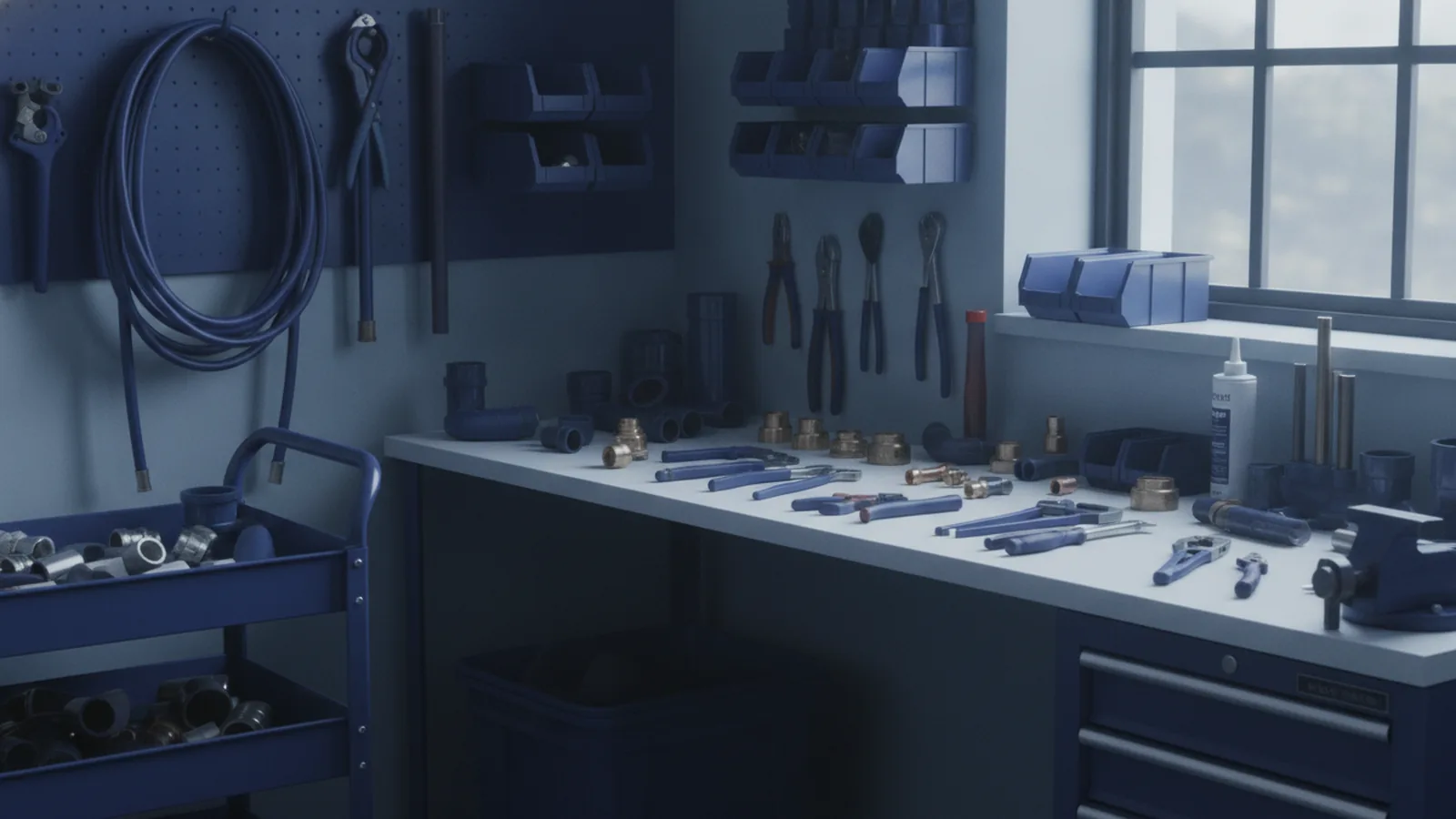
For equipment and tools, focus on reliable basics. You need tools for diagnosis, common repairs, and safe cleanup. You also need parts you use most often, so you don’t lose a job by waiting for deliveries.
| Category | Essential items to plan for |
|---|---|
| Diagnosis | flashlight, inspection camera, pressure gauge, leak detection supplies |
| Hand tools | wrenches, pipe cutters, pliers, screwdrivers, cutting and deburring tools |
| Drain and line work | drain snake, auger or rotor, plungers, drain cleaning accessories |
| Fittings and parts | valves, fittings, washers, pipe sealants, repair clamps |
| Safety and cleanup | gloves, eye protection, drop cloths, disposal bags, PPE kit |
Also plan for your vehicle and inventory system. A small inventory that is well labeled beats a large pile you can’t find. Track your stock by job type, so you reorder what you use weekly.
When you’re learning how to start a plumbing business with no money, you can still set up operations. Get used tools from reputable dealers or buy only the core tools first. Keep your service menu tight until cash flow supports wider coverage.
Marketing your plumbing services and getting customers
Marketing for tradespeople works best when it’s consistent and local. You don’t need viral posts. You need leads you can convert into repeat customers. Start where locals already search: your service area, your phone number, and your availability.
Effective early channels include a good business profile, local directories, and community referrals. You can also create trust with before-and-after photos of completed work, as long as you respect privacy. Most importantly, respond quickly and show up prepared.
Customer acquisition tactics that work for new plumbers:
- Offer a clear call-out fee or diagnostic fee, so customers know what to expect.
- Set expectations for arrival windows, even if you can’t guarantee a minute.
- Ask every satisfied client for a referral, plus a review if allowed.
- Build a simple text reminder flow for scheduled jobs.
- Network in the plumbing community for leads and shared problem-solving.
If you want to start a small plumbing business, measure marketing weekly. Track calls, booked jobs, and show-up rate. If one channel brings calls but no bookings, your quote process or service menu needs adjustment.
Pricing strategies, service charges, and quotes
Pricing is not only about being cheapest. It is about matching value, risk, and time. Customers pay for clarity and a plan, especially during emergencies.
Most plumbers use a model that separates labor from parts. A common structure is a service call or diagnostic fee, plus hourly labor. Then add parts at cost plus a margin, or add a bundled repair price.
When you quote, think about three things: time, parts, and uncertainty. If you’re opening a wall, you may find surprises. If you quote too low, you absorb the risk. If you quote too high, you lose the job. Your goal is consistency across many jobs, not winning every single quote.
Here’s a simple way to build a pricing table for your early business:
| Service | What to include in price | Common charging method |
|---|---|---|
| Drain clog | diagnosis, cleaning pass, basic inspection | flat price range by severity |
| Leak repair | locate leak, repair fitting, test for re-leak | labor + parts |
| Water heater replacement | swap unit, flush and test, basic setup check | flat install price with add-ons |
| Toilet repair | repair parts, verify flush and seal | flat repair price |
Also define your service charges. Many plumbers charge a separate fee for after-hours or urgent dispatch. Make sure your terms are clear at booking, so misunderstandings don’t turn into refunds.
Financial planning: startup costs, budgeting, and financing options
To how to start your own plumbing business successfully, you must understand your cost structure for plumbing. Startup costs usually include licensing fees, tools and equipment, vehicle costs, insurance, and initial marketing. Parts inventory can also be a big early cost if you stock broadly.
Build a budget that matches your first 90 days. Include your fixed costs, then estimate your variable costs per job. For variable costs, track parts usage, disposal fees, and fuel per service call.
A practical budgeting approach:
- List every upfront cost, including business registration and insurance deposits.
- Estimate monthly fixed costs like rent, phone, software, and fuel.
- Model a conservative job count and average ticket size.
- Add a cash buffer for slow weeks and refunds.
- Revisit the numbers after your first month of real invoices.
Business financing options can help when buying bigger tools or a reliable work vehicle. Sometimes, simple lines of credit cover initial inventory. If you’re starting how to start a plumbing business with no money, focus first on cash flow jobs. Avoid large purchases until your booking pattern is stable.
If your long-term goal is how to start a plumbing supply business, your finances change. Retail needs inventory and storage. A hybrid plan can work, like service plus a small parts shelf, but budget carefully.
Tips for success in plumbing and how to handle common challenges
The early challenges are predictable. You will win some jobs and miss others. You will spend time on admin. Then you will face a customer issue that feels personal.
Here are common problems and how to overcome them, based on real owner patterns:
- Inconsistent lead flow: keep weekly outreach steady and improve your quote process.
- Underpricing: update your pricing after you review job time and rework costs.
- Parts shortages: standardize fast-moving parts so you can fix on the first visit.
- Scheduling stress: plan travel time and build buffer for diagnosis and cleanup.
- Customer service friction: confirm expectations in writing for larger jobs.
Operational management is where small businesses differentiate. You need a system for intake, job notes, photos, and warranty follow-up. That system protects your reputation when something goes wrong.
Finally, keep learning. Plumbing certification training, supplier relationships, and networking in the plumbing community help you handle more job types over time. Growth should feel like adding stable capacity, not random surprises.
FAQs about starting a plumbing business
Quick note: licensing and rules vary by location. Always verify your local plumbing regulations and permit needs.
How do I start a plumbing business with no money? Start with a tight service menu, buy only core tools, and use cash flow from early jobs. Keep your operations simple so you can turn bookings into stable work.
What is the first step for how to start my own plumbing business? Confirm your licensing path and your legal scope in your region. Then build a plan for your first 90 days and price your first service offers.
Do I need business registration before I get customers? In most places, yes. Registration supports proper invoicing and helps you open business banking and insurance.
What tools do I need to start plumbing? Plan for diagnosis tools, hand tools, drain cleaning gear, and safe cleanup supplies. Start with what matches your niche so you don’t waste money.
How should I price plumbing services? Use a clear structure for diagnostic or call-out fees, then labor plus parts. Price for time and risk, and update after you see your real job costs.
How do I get my first customers? Use local search visibility, directories, and fast phone response. Ask for referrals and reviews from satisfied clients, and track which channel produces booked jobs.
Frequently asked questions
- What are the first steps to how to start a plumbing business?
- Confirm your license path and legal scope, then choose a niche and service menu. Create a cash-focused business plan and price your first offers before marketing.
- How do I start my own plumbing business without money?
- Start with a tight niche and buy only core tools. Get early cash flow through a small service menu while you build reviews and repeat customers.
- What licenses and permits do plumbers typically need by region?
- Requirements vary, but many places require a plumber or contractor license plus permits for certain installs. Check your local licensing board and city or county permit office for your exact work scope.
- Which plumbing certifications help most when starting out?
- Certifications vary by system and location. Common examples include training tied to water heaters, backflow testing, or other specialized work your niche targets.
- What tools and equipment are essential to begin plumbing services?
- You need diagnostic tools, core hand tools, drain cleaning equipment, and safety gear. Match purchases to your niche so you do not overspend early.
- How should plumbing services be priced and quoted?
- Use a clear structure like a service or diagnostic fee plus labor and parts. Quote with time and risk in mind, and update your rates based on real job costs.
Related reading

Start a Mobile Drug Testing Business (Without a Lab)
Build a mobile testing service with sound training, lab links, and clear pricing.

Start a Business with a Problem Worth Solving
Turn a useful idea into a business with clear steps, sound research, and steady resolve.

Loft Conversion Timelines — What Affects the Build
Typical build times range from four to twelve weeks, plus planning and setup.